0%

Subscription commerce is changing how brands use packaging. Every monthly delivery becomes a product experience, a shipping decision, and a sustainability test. Custom Ecommerce Subscription Mailer Boxes help brands combine these needs within one compact format.

The global e-commerce packaging market continues to expand. Smithers reports strong long-term growth, driven by home delivery, subscription models, and demand for convenient parcel formats. DHL’s 2024 E-Commerce Trends Report also shows that sustainability increasingly influences online purchasing decisions. Customers notice excessive void fill, damaged corners, and difficult recycling. They also remember a box that opens cleanly on a kitchen table.

Packaging consultant Lisa McTigue Pierce offers a practical principle: “Packaging should protect the product, not become the product.” That idea matters for subscription brands. A rigid mailer can protect skincare bottles, coffee pouches, or small lifestyle products without creating unnecessary bulk. Recycled kraft board, water-based inks, and right-sized construction can support a clearer environmental message. The details still require testing.

A beautiful box can fail during humid delivery conditions. A recyclable box may include a plastic insert. The sustainability claim can become vague without supplier documentation. Brands should measure damage rates, material weight, return feedback, and repeat-purchase behavior. McKinsey’s consumer research also indicates that shoppers increasingly connect packaging choices with brand trust, although price and product quality remain powerful influences.

This article examines materials, dimensions, printing, fulfillment, and supplier evaluation. It also questions easy assumptions. Better packaging is not automatically greener packaging. Evidence must decide.
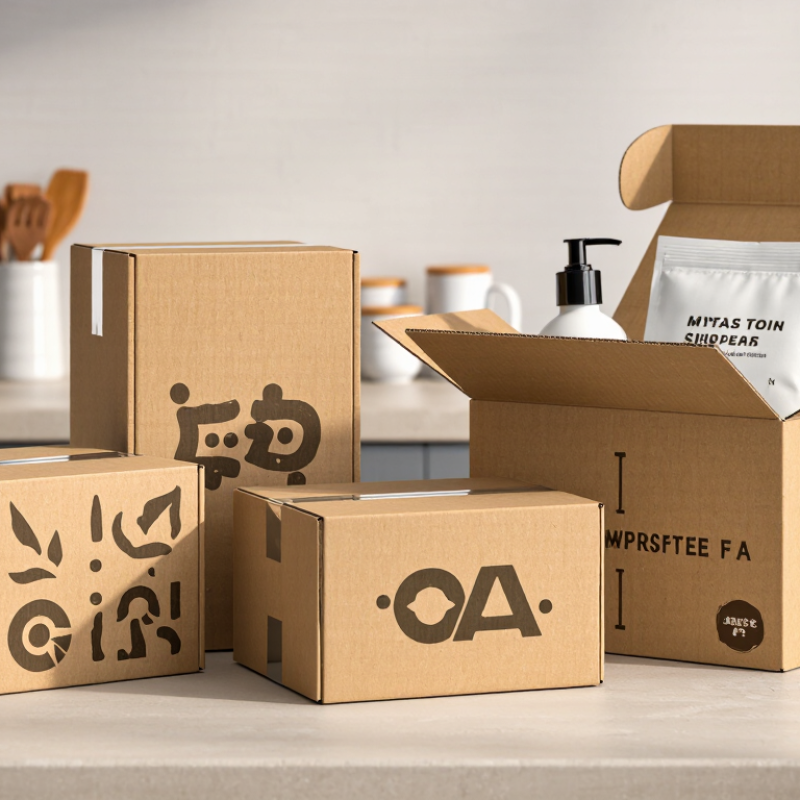
China Top Custom Ecommerce Subscription Mailer Boxes?

What Are Custom Ecommerce Subscription Mailer Boxes?

A custom ecommerce subscription mailer box is a corrugated shipping package designed for recurring deliveries. It holds products securely while presenting a consistent unboxing experience. Unlike standard cartons, it can include printed graphics, product compartments, tear strips, inserts, or personalized messages. Its dimensions should match the subscription contents, not merely look attractive.

This matters because repeated shipments multiply packaging decisions. The U.S. Environmental Protection Agency reported that containers and packaging generated 82.2 million tons of municipal solid waste in 2018. A smaller box can reduce empty space, filler, and transport volume. However, thinner materials may fail under humidity, stacking, or rough parcel handling. Practical testing is essential. A box that arrives damaged is not sustainable.

The National Retail Federation estimated that U.S. retail returns reached about 16.9% of sales in 2024. Subscription packaging should therefore support safe opening and possible reclosure. Useful features include recyclable paper tape, clear disposal instructions, and a fitted insert that prevents movement. Custom printing also requires careful ink and coating choices. Glossy finishes may improve appearance, but they can complicate recycling in some systems. The best specification balances protection, repeatability, cost, and local recycling conditions. It is easy to overdesign the first version. A measured pilot often reveals better dimensions, weaker corners, or unnecessary components.

China Top Custom Ecommerce Subscription Mailer Boxes? What Are Custom Ecommerce Subscription Mailer Boxes?

Custom ecommerce subscription mailer boxes are corrugated cartons designed for recurring product shipments. Board flute selection affects box strength, protection, weight, and available internal space.

Typical nominal corrugated board thickness: E-flute is commonly used for lightweight products and premium print quality, while B-, C-, EB-, and BC-flute boards provide progressively greater cushioning and stacking strength. Actual caliper can vary by paper grade and manufacturer.

China’s Ecommerce Packaging Outlook: 161 Billion Parcels in 2022 (Pitney Bowes)

China’s ecommerce market handled about 161 billion parcels in 2022, according to a widely cited parcel-volume report. That figure shows how quickly packaging decisions can affect warehouses, couriers, and households. Custom subscription mailer boxes need more than attractive printing. They must survive repeated handling, stacking, moisture, and delivery across long distances.

A practical box usually combines accurate dimensions, reliable corrugated board, and simple opening features. A snug fit can reduce movement around candles, stationery, skincare tools, or small lifestyle products. Less empty space may also lower filler use and shipping volume.

However, smaller is not always better. Tight packaging can damage products when workers pack quickly or customers reopen the box.

Packaging teams should test samples before placing large orders. Drop tests, compression checks, and vibration trials reveal weaknesses that photos cannot show. Measuring box weight, closing time, damage rates, and customer feedback adds useful evidence. Printing should remain legible after rubbing and exposure to light. Water-based inks and recyclable paper materials may support cleaner disposal, but local recycling systems differ.

There is room for mistakes. A beautiful prototype may fail during peak-season packing. A cheaper board grade may increase replacement costs later. Subscription packaging also needs practical review after several delivery cycles, not just one successful test. Suppliers should provide material specifications, production samples, and clear quality records before approval.

How Box Materials, Sizes, and Printing Affect Unboxing Performance

For China-made custom ecommerce subscription mailer boxes, material choice directly affects the unboxing experience. Corrugated kraft board feels natural, protects products, and supports easier recycling. The 2023 Two Sides Global Packaging Survey found that 82% of consumers view paper and cardboard packaging as more sustainable than other materials. However, recycled fibers can reduce stiffness in humid conditions. A practical trial should include drop, compression, vibration, and moisture testing. One attractive box can still arrive crushed.

Size changes both protection and shipping efficiency. A snug interior reduces product movement, tissue waste, and opening frustration. Too-tight dimensions may damage bottles, jars, or folded garments. Pitney Bowes’ 2024 Parcel Shipping Index reported 161.8 billion parcels shipped globally in 2023, making volume control increasingly important. Oversized mailers may trigger dimensional-weight charges and require extra void fill. Measure the packed product, not only its catalog dimensions.

Printing shapes the first visual moment. High-contrast artwork improves readability, while soft-touch coatings create a premium hand feel. Yet heavy ink coverage may complicate recycling and increase production variation. Keep essential instructions large enough to read under warm warehouse lighting. Add a clear return message inside the lid. It is a small detail. Digital printing supports short subscription runs and version changes, but color matching can still drift between batches. Do not assume the approved sample represents every shipment. Test several production boxes before scaling.

How to Evaluate Chinese Suppliers: MOQ, Lead Time, QC, and Certifications

For custom ecommerce mailer boxes, supplier evaluation should begin with evidence, not attractive samples. Request the MOQ for each size, print method, paper grade, and finish. A practical pilot often starts around 500–1,000 units. Smaller orders may carry higher unit costs. Confirm whether the MOQ includes spare boxes for production defects. Ask for a written lead-time schedule: artwork approval, sampling, material sourcing, production, and shipment. For many standard projects, sampling takes 7–15 days, while production may require 15–30 days. Complex finishes can extend this window.

Quality control needs measurable checkpoints. Specify board thickness, GSM, dimensions, color tolerance, adhesive strength, and compression performance. Request pre-production approval and a final inspection report. An AQL-based inspection can be useful, but it should not replace carton drop testing. Check the supplier’s ISO 9001 certificate through the issuing body. If sustainable sourcing matters, verify the FSC certificate and its product scope. Certifications are not automatically transferable to every box. That is an easy mistake.

DHL’s 2024 E-Commerce Trends Report found that 72% of shoppers consider sustainability when purchasing online. This supports recycled or responsibly sourced materials, but sustainability claims still need documentation. Smithers’ research also identifies continued growth in ecommerce packaging demand, increasing pressure on suppliers and capacity. I would not trust the cheapest quotation alone. A low MOQ may hide weak quality control, while a short lead time may depend on unapproved substitutions. My checklist is useful, but not perfect. Recheck assumptions after the pilot shipment.

China Top Custom Ecommerce Subscription Mailer Boxes? — How to Evaluate Chinese Suppliers: MOQ, Lead Time, QC, and Certifications
Evaluation Dimension Entry-Level Custom Supplier Mid-Volume Custom Supplier High-Volume Subscription Supplier Premium Structural & Sustainable Supplier Buyer Verification Points
Typical Product Scope Standard corrugated mailer boxes with basic one- or two-color printing. Full-color printed mailers, inserts, stickers, and common finishing options. Recurring subscription-box programs with coordinated packaging components. Rigid, magnetic, specialty-finish, or highly engineered sustainable packaging. Confirm whether the supplier manufactures in-house or outsources printing, converting, and finishing.
Sample MOQ 1–5 sets 1–10 sets 1–10 sets 1–3 sets Ask whether the sample fee, tooling, freight, and sample revisions are refundable after bulk production.
Bulk MOQ 500–1,000 units 1,000–3,000 units 3,000–10,000 units 500–3,000 units MOQ may vary by box size, paper grade, printing process, finishing, and the number of artwork versions.
Digital Printing MOQ 100–300 units 100–500 units 300–1,000 units 100–500 units Digital printing usually lowers the MOQ but can have a higher unit cost than offset printing at larger volumes.
Pre-Production Sample Lead Time 5–10 calendar days 7–12 calendar days 7–14 calendar days 10–20 calendar days Lead time should start after artwork approval, payment of sample charges, and confirmation of material specifications.
Mass Production Lead Time 15–25 calendar days 18–30 calendar days 20–35 calendar days 25–45 calendar days Request a written production schedule covering material purchasing, printing, converting, inspection, and packing.
Repeat-Order Lead Time 12–22 calendar days when materials and tooling are unchanged. 15–25 calendar days with approved specifications on file. 15–30 calendar days, depending on monthly order volume and artwork changes. 20–40 calendar days because specialty materials and finishes may require additional preparation. Confirm reserved production capacity for subscription programs and define the reorder cut-off date.
Board and Material Options E-flute or B-flute corrugated board; kraft or white liner; common paper grades. E-flute, B-flute, and selected recycled-content boards with coated or uncoated liners. Board combinations selected for stacking, parcel shipping, automated fulfillment, and repeat orders. Recycled, FSC-certified, molded-fiber, rigid-board, or specialty-texture options where available. Verify flute profile, grammage, caliper, recycled content, compression requirements, and approved material samples.
Print and Finishing Capability Flexographic or basic digital printing; limited finishing. Offset or digital printing, aqueous coating, matte or gloss lamination, and die-cutting. Multi-SKU artwork management, inserts, variable labels, kitting, and batch identification. Embossing, debossing, foil effects, specialty papers, structural prototypes, and premium coatings. Approve a physical color proof or production sample; define acceptable color tolerance and finishing limits.
Quality Control System Basic incoming, in-process, and final visual inspection. Documented inspection checklists covering dimensions, print, bonding, and packing quantity. Batch traceability, first-article approval, AQL-based final inspection, and corrective-action records. Formal quality management procedures with tighter structural, cosmetic, and material verification. Ask for inspection records, defect classifications, corrective-action procedures, and retained production samples.
Recommended Final Inspection Visual inspection plus dimensional and quantity checks. Visual, dimensional, print, glue, and packaging checks before shipment. Pre-shipment inspection using an agreed AQL plan, commonly with critical, major, and minor defect limits. Pre-shipment inspection plus structural performance and specialty-finish checks. Agree on inspection scope before production; do not rely only on photographs supplied by the factory.
Common Quality Tests Box dimensions, flatness, print appearance, die-cut accuracy, and glue adhesion. Compression or stacking checks, crease accuracy, color consistency, and barcode readability. Edge crush or box compression testing, drop or handling checks, moisture protection, and pack-out validation. Material strength, coating adhesion, structural performance, and specialty-finish durability. Test methods and acceptance limits must be written into the purchase specification and approved before production.
ISO 9001 Verify certificate Verify certificate Verify certificate Verify certificate Check certificate scope, legal entity name, issuing body, validity period, and whether the site address matches the factory.
FSC Chain of Custody Optional; verify when claimed Optional; verify when claimed Recommended for certified-paper claims Recommended for certified-paper programs Only make FSC claims when the relevant certificate and product-chain documentation are valid and applicable.
Recycled Content Documentation Supplier declaration or material specification. Material specification and supplier declaration. Batch or mill documentation recommended for recurring programs. Independent documentation or recognized recycled-content certification preferred. Ask for the percentage, basis of calculation, applicable standard, and evidence linking the claim to the purchased material.
Food-Contact Suitability Not automatic Not automatic Required only when applicable Required only when applicable For direct food contact, request applicable migration or food-contact documentation; ordinary mailer boxes are not automatically food-safe.
Ecommerce Fulfillment Readiness Suitable for simple manual packing and low order frequency. Suitable for standard fulfillment workflows and several product configurations. Suitable for kitting, SKU control, batch labeling, inserts, and scheduled replenishment. Suitable for premium unboxing programs requiring prototypes and detailed pack-out control. Run a real pack-out test with the actual products, inserts, void fill, shipping label area, and closing method.
Best-Fit Use Case Market testing, small launches, and simple standardized packaging. Growing ecommerce brands requiring customization and balanced unit economics. Established subscription programs with recurring monthly or quarterly demand. Premium launches, sustainability-led programs, and complex or highly visual unboxing experiences.
Benchmark note: The quantities and lead times shown are practical Chinese packaging-market benchmark ranges for evaluation and planning, not guaranteed quotations from any specific supplier. Actual results depend on box dimensions, board grade, artwork, finishing, order quantity, seasonality, payment timing, and shipping requirements. All certificates and sustainability claims should be independently verified before purchase.

How to Compare Landed Costs Under China’s 2023 Export Packaging Data

China Top Custom Ecommerce Subscription Mailer Boxes?

How to Compare Landed Costs Under China’s 2023 Export Packaging Data

Custom subscription mailer boxes can look inexpensive until every landed-cost element is measured. China’s 2023 export packaging data provides a useful benchmark for carton materials, declared weights, dimensions, and export volumes. However, it should guide comparison, not replace a current supplier quotation.

Request a detailed pro forma invoice showing box production, printing, inserts, tooling, quality inspection, and export packing. Then add inland transport, port charges, freight, insurance, import duty, brokerage, and local delivery. Compare costs per usable box, not per carton. A smaller box may reduce freight, while thicker board can lower damage rates. Test both options with realistic product weights and a short trial shipment.

Tips: Record the box’s outer dimensions and gross weight after packing. Check whether quoted freight uses actual or volumetric weight. Ask for material specifications, production tolerance, and photos from a pre-shipment inspection. Keep currency, trade terms, and destination unchanged across quotations. Otherwise, the comparison becomes misleading.

One detail is often missed. Subscription packaging may require several box sizes, creating different freight brackets and storage costs. Include replacement packaging and slow-moving inventory in the model. The cheapest quotation may fail after damage, rework, or customs delays. A careful buyer should revisit the calculation when freight rates or import rules change. Data is helpful, but not perfect.

FAQS

What makes a custom subscription mailer box reliable?

Accurate dimensions, strong corrugated board, and secure closing features improve delivery performance. The box should resist stacking, moisture, drops, and vibration.

How should box size be selected?

Measure the packed product, not only its catalog dimensions. A snug fit reduces movement and filler. Too-tight packaging may crush jars or folded garments.

What materials work well for subscription packaging?

Corrugated kraft board offers protection and easier recycling. Recycled fibers may lose stiffness in humid conditions. Test the material before ordering large quantities.

Which tests should packaging teams conduct?

Use drop, compression, vibration, and moisture tests. Record damage rates, box weight, closing time, and customer feedback. Photos are not enough.

How can printing improve the unboxing experience?

High-contrast printing improves readability under warm warehouse lighting. Soft-touch coatings add texture. Keep return instructions large and visible inside the lid.

Can digital printing support subscription shipments?

Digital printing suits short runs and changing designs. Color may drift between batches. Test several production boxes before approving a larger order.

What supplier details should buyers request?

Request MOQ, paper grade, dimensions, print method, finish, lead time, and spare-box policy. Ask for material specifications and production samples.

How can supplier quality be checked?

Define board thickness, GSM, dimensions, color tolerance, adhesive strength, and compression targets. Request a final inspection report. Certificates need verification.

Is the cheapest quotation a good choice?

Not always. A low price may hide weak quality control or material substitutions. Review the pilot shipment, then question your assumptions.

Conclusion

Custom Ecommerce Subscription Mailer Boxes are purpose-built packaging solutions for recurring online orders, combining product protection, efficient shipping, and a memorable unboxing experience. This article explores China’s rapidly expanding ecommerce packaging market, including the scale of approximately 161 billion parcels in 2022, and explains how rising delivery volumes influence box design, production planning, and supplier selection.

It also examines how material choice, box dimensions, structural strength, and printing quality affect cost, sustainability, durability, and customer perception. For businesses sourcing from China, the guide outlines practical ways to evaluate suppliers through minimum order quantities, lead times, quality control procedures, and relevant certifications. Finally, it explains how to compare landed costs by considering manufacturing, printing, packaging, freight, duties, and export-related expenses, helping buyers choose reliable packaging solutions while maintaining consistent quality and competitive margins.

Amelia

Amelia

Amelia is a dedicated marketing professional with a strong understanding of the company’s products, services, and customer-focused solutions. With a thoughtful approach to communication and a passion for turning complex information into clear, useful insights, she regularly contributes professional......