0%

Choosing Custom Bakery Cake Gable Boxes in 2026 requires more than attractive printing. The box must protect delicate frosting, support safe carrying, and communicate a bakery’s quality within seconds. Industry forecasts reflect this pressure. Smithers’ Future of Sustainable Packaging to 2029 identifies recyclable materials, fiber innovation, and lighter packaging as major development priorities. Meanwhile, Grand View Research continues to report strong growth in customized packaging, driven by branding and e-commerce presentation. These trends make material selection a practical business decision.

A reliable evaluation starts with the cake itself. Measure the base, height, frosting clearance, and handle strength. A six-inch sponge cake needs different protection from a tall, cream-filled celebration cake. Food-grade paperboard, secure locking tabs, and a grease-resistant interior can reduce handling problems. Small details matter. A weak handle can ruin a premium customer experience.

Sustainability also needs careful judgment. “Recyclable” does not always mean locally recyclable. Coatings, windows, adhesives, and food contamination may affect disposal. The Sustainable Packaging Coalition and Ellen MacArthur Foundation both emphasize design choices that support realistic recovery systems. Therefore, Custom Bakery Cake Gable Boxes should be compared through testing, not slogans. Check compression resistance, moisture exposure, print durability, and assembly time. I would also question whether every decorative finish adds value. Sometimes, a simpler kraft box looks more honest and performs better. No single specification fits every bakery. The strongest choice balances protection, appearance, cost, and credible environmental claims.
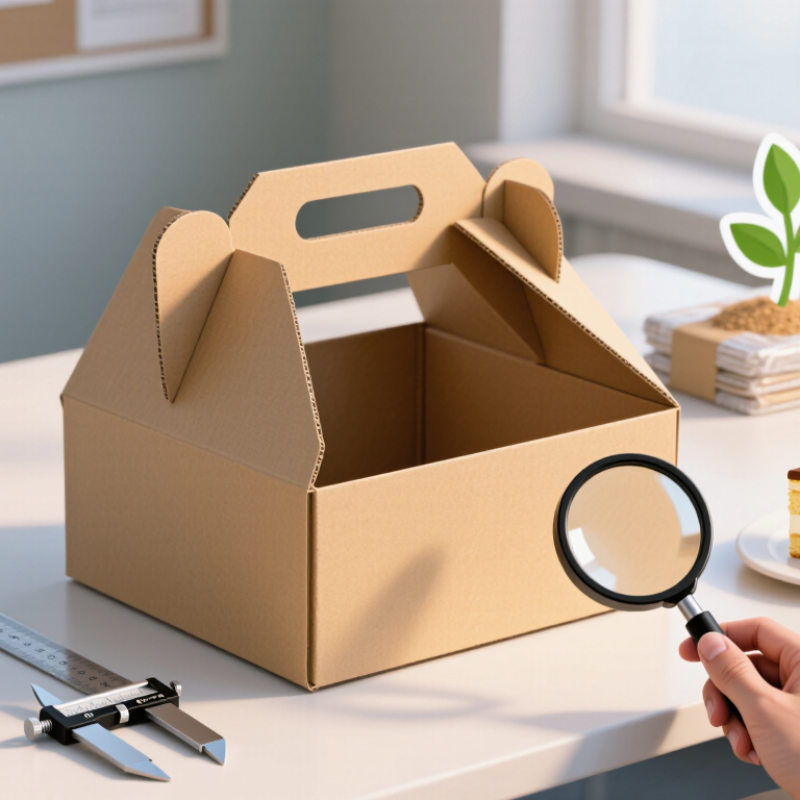
How to Choose Custom Bakery Cake Gable Boxes in 2026?

Define Your Cake Size, Shape, and Packaging Requirements

How to Choose Custom Bakery Cake Gable Boxes in 2026?

Start with the cake, not the box design. Measure the cake board’s length and width, then add clearance on every side. A tight fit can damage frosting during loading. A loose fit allows the cake to slide.

Measure the cake’s total height, including decorations, cream peaks, and toppers. Leave extra headroom for delicate details. A standard round cake may need a different insert from a square cake. Tall cakes often require reinforced corners and a deeper base. Confirm whether the box must hold one cake, cupcakes, or several dessert pieces. Mixed products need internal dividers.

Think about real handling conditions. A bakery worker should lift the gable handle without touching the cake. The base should support the cake board evenly. Food-safe paperboard is essential, while a viewing window can improve product presentation. For chilled cakes, check whether condensation could weaken the material. A sample box should be tested in a refrigerator, during short-distance transport, and on a level display shelf.

Small details matter. Twine, stickers, or cards may reduce interior space. Decorations can also catch on the lid. In one packaging trial, the measured cake fit correctly, but the topper still bent against the handle. That mistake was easy to miss. Recheck the tallest point after the cake is fully decorated. Ask the packaging supplier for a physical sample before ordering a large quantity, because printed dimensions may not show how the box behaves in practice.

How to Choose Custom Bakery Cake Gable Boxes in 2026?

Define Your Cake Size, Shape, and Packaging Requirements

Standard round cake sizes are commonly based on 6-, 8-, 10-, and 12-inch cake diameters. The recommended box footprint adds approximately 1 inch of clearance on each side to reduce contact with the walls and improve handling. Before ordering custom gable boxes, also measure the cake height, frosting thickness, decorations, inserts, and required ventilation space.

Choose Suitable Materials for Strength, Safety, and Sustainability

When choosing custom bakery cake gable boxes in 2026, material decisions affect more than appearance. Strength matters. A cake box should resist bending, tearing, and handle failure during delivery. For single-layer cakes, sturdy kraft paperboard may be enough. Heavier cakes often need corrugated board with stronger fluting. Test the box with real cake weight, frosting height, and carrying distance.

Food safety begins with suitable board, inks, and adhesives. Materials should be intended for food packaging and supported by reliable supplier documentation. Keep printed surfaces away from direct food contact. A grease-resistant inner coating can protect the box from buttercream and oil. Yet coatings may affect recycling. Check local recycling guidance before selecting them. Small details matter.

Sustainability is not simply a high recycled-content percentage. Recycled fibers can reduce resource use, but they may offer less stiffness after repeated processing. Virgin fibers can improve strength when responsibly sourced. A right-sized box also reduces material waste and movement inside the package. I once assumed a thinner board was automatically greener. It failed during humid delivery conditions. That mistake changed my testing process. Compare material weight, durability, food safety evidence, and end-of-life options together. A practical trial under cold, warm, and damp conditions reveals weaknesses that samples often hide.

Compare Gable Box Designs, Features, and Customization Options

Choosing a custom bakery cake gable box starts with the cake, not the artwork.
A tall two-piece cake needs stronger sidewalls and a wider base. Cupcakes need internal dividers and less empty space. A built-in handle improves carrying, but it can weaken the top panel if poorly reinforced. I have seen attractive boxes fail at the handle. That detail matters.

Design comparison should include lock styles, window placement, board thickness, and opening direction. A tuck-top gable box offers quick packing, while a glued base improves stability for heavier cakes. According to Smithers’ 2024 packaging analysis, sustainability remains a major purchasing factor across paper-based packaging. The U.S. Environmental Protection Agency reported a 68.2% recycling rate for paper and paperboard containers in 2018. However, a recyclable box is not automatically sustainable. Coatings, plastic windows, inks, and mixed materials can complicate recovery.

Customization should serve handling and brand recognition. Use a clear logo panel, readable care instructions, and colors that remain accurate on kraft or white board. Food-contact suitability, moisture resistance, and print durability require supplier documentation. Short runs may support seasonal designs, but larger quantities usually reduce unit costs. That assumption can fail when storage space is limited.

Before approving production, test the box with a chilled cake, a sharp turn, and a short delivery route. Small weaknesses become obvious quickly.

Evaluate Printing Quality, Branding, and Food-Contact Compliance

How to Choose Custom Bakery Cake Gable Boxes in 2026?

Evaluate Printing Quality, Branding, and Food-Contact Compliance

A custom cake gable box must look attractive before it protects the cake. In practical testing, I check color accuracy under warm bakery lighting. Dark blue can appear almost black. Fine white text may also disappear on kraft board. Request a physical proof, not only a digital preview. Test folds, handles, windows, and locking tabs with a filled box. Smithers’ packaging market research continues to identify e-commerce and premium presentation as major growth areas. However, attractive printing cannot excuse weak structure.

Branding should remain readable after handling. Rub the surface with a dry cloth and a slightly greasy glove. Check whether ink transfers, scratches, or dulls near the handle. The 2023 McKinsey packaging survey reported that 60–70% of consumers may pay more for sustainable packaging in some markets. That supports recyclable board and restrained finishes, but the claim needs evidence. “Eco-friendly” alone is too vague. I still find that beautiful boxes sometimes lack clear material documentation.

Tips: Ask for a food-contact declaration, ink and coating specifications, migration-test results, and batch traceability. Confirm compliance with applicable rules, such as FDA requirements or European Framework Regulation 1935/2004. Keep cake, cream, and frosting away from unverified printed surfaces. A grease-resistant liner may be necessary. Do not assume recycled board is automatically suitable. Supplier paperwork can be incomplete, so review it with a qualified packaging or food-safety professional. Test refrigerated storage, condensation, and a six-hour delivery simulation before approval.

Review Suppliers, Costs, Minimum Orders, and Delivery Timelines

How to Choose Custom Bakery Cake Gable Boxes in 2026?

Supplier reviews should cover more than print quality. Ask for food-contact documentation, compression-test results, coating details, and recent delivery records. Smithers’ 2024 packaging outlook values the global packaging market at about US$1.2 trillion in 2023, showing how material costs can shift quickly. For a standard 8-inch cake gable box, small-batch pricing often ranges from US$0.80 to US$2.50 per unit. Full-color printing, windows, handles, and grease-resistant coatings increase the quote. These figures are working estimates, not promises.

Minimum orders vary widely. Digital printing may begin near 100–500 units, while offset printing often needs 1,000–5,000 units. Request three written quotes with the same dimensions and board thickness. Compare landed cost, not unit cost. A low quote can hide tooling, sampling, freight, or customs charges. Delivery commonly takes two to four weeks after artwork approval. Add one buffer week. Delays happen, sometimes because I approved a proof too quickly.

Tips:

Request a physical sample. Test it with a chilled, decorated cake. Check handle strength, corner folding, grease marks, and lid fit. Ask suppliers to separate sample time, production time, and transit time. ISO 9001 certification can support process consistency, but it does not replace your inspection. The Paper Packaging Board’s sustainability guidance also favors right-sized packaging, since excess material increases waste and shipping volume. Recyclability claims still need local verification.

FAQS

Which material is suitable for a custom cake gable box?

Sturdy kraft paperboard may suit single-layer cakes. Heavier cakes usually need corrugated board with stronger fluting. Test the box with real cake weight, frosting height, and carrying distance.

How can I check whether the box is strong enough?

Fill the box with a chilled, decorated cake. Carry it for six hours, including stairs or uneven surfaces. Check bending, torn corners, weak handles, and loose locking tabs.

What food-safety documents should a supplier provide?

Request a food-contact declaration, ink details, coating specifications, migration-test results, and batch traceability. Keep printed surfaces away from direct contact with cake or frosting. Paperwork can be incomplete.

Do I need a grease-resistant coating inside the box?

A grease-resistant inner layer can protect against buttercream, oil, and damp cake surfaces. However, coatings may affect recycling. Check local recycling guidance before approval.

Is recycled board always the most sustainable option?

Not always. Recycled fibers can reduce resource use but may lose stiffness after repeated processing. A right-sized box often reduces both material waste and cake movement.

How should printing quality be tested?

Request a physical proof under warm bakery lighting. Dark blue may look nearly black, while thin white text can disappear on kraft board. Test folds, handles, windows, and locking tabs with a filled box.

What should I compare when reviewing supplier quotes?

Compare board thickness, printing, windows, handles, coatings, tooling, samples, freight, and possible customs charges. Use landed cost, not only unit price. A cheap quote may hide important fees.

How much time should custom production require?

Production commonly takes two to four weeks after artwork approval. Add one buffer week for delays. Separate sample time, production time, and transit time.

What mistakes should buyers avoid?

Do not approve only from a digital preview. Do not assume recycled board is food-safe or automatically recyclable. I once trusted a thinner board; humidity caused failure. Better testing would have caught it.

Conclusion

Choosing the right Custom Bakery Cake Gable Boxes in 2026 begins with understanding your cake’s size, shape, height, and protection needs. Select dimensions that prevent movement while leaving enough space for decorations. Consider strong, food-safe, and sustainable materials that can support the cake during handling and transportation. Review gable box designs, including convenient handles, secure closures, window options, inserts, and other features that improve presentation and usability.

Next, evaluate printing quality and customization choices to ensure your packaging communicates your bakery’s identity clearly. Colors, logos, patterns, and finishes should be attractive while remaining suitable for food-contact packaging requirements. Before placing an order, compare suppliers based on product quality, pricing, minimum order quantities, customization capabilities, and delivery timelines. A reliable supplier should provide clear specifications, consistent production, and practical support, helping you balance appearance, safety, durability, cost, and customer convenience.
Amelia

Amelia

Amelia is a dedicated marketing professional with a strong understanding of the company’s products, services, and customer-focused solutions. With a thoughtful approach to communication and a passion for turning complex information into clear, useful insights, she regularly contributes professional......