Choosing Eco Friendly Kraft Mailer Boxes in 2026 requires more than selecting a brown shipping envelope. Kraft paper can reduce plastic use, but its environmental value depends on fiber sourcing, coatings, inks, adhesives, and end-of-life recovery. That assumption needs testing.
The U.S. Environmental Protection Agency reported that paper and paperboard recycling reached approximately 68.2% in 2018. However, recycling performance varies by local collection systems and contamination levels. McKinsey & Company’s 2023 packaging research also found that consumers increasingly consider sustainability during purchasing decisions, although price and product protection still influence final choices. These findings make box design a practical business decision, not merely a branding exercise.
Ellen MacArthur, founder of the Ellen MacArthur Foundation, stated, “We need to design out waste and pollution.” This principle applies directly to Eco Friendly Kraft Mailer Boxes. Look for recycled or responsibly sourced fibers, water-based inks, recyclable paper tape, and minimal void space. A box should survive warehouse handling without excessive material.
Measure real performance.
A lightweight mailer that arrives crushed creates replacement shipments and hidden emissions. An oversized box wastes material and increases transport volume. The better choice balances durability, verified sourcing, regional recycling access, and clear supplier documentation. Certifications can help, but they are not magic. Buyers should still question vague claims, request test results, and examine the complete packaging system before approving a 2026 specification.
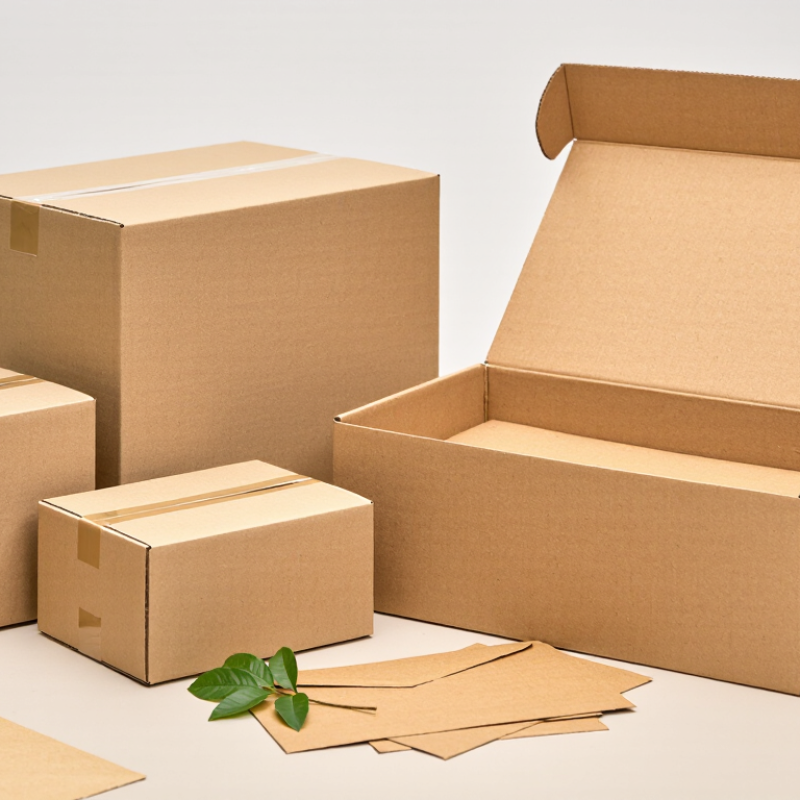
Define Eco-Friendly Kraft Mailers with FSC Fiber and LCA Data
Choosing eco-friendly kraft mailer boxes in 2026 starts with evidence, not a brown surface. FSC fiber offers a traceability baseline through certified forests and controlled supply chains. FSC Facts & Figures reporting places its certified forest area above 150 million hectares worldwide. That scale matters, but certification alone does not measure a box’s full climate impact. Ask for the certificate code, fiber mix, recycled content, and chain-of-custody scope. A supplier should show these details in current product documents. If the answer is vague, pause. Real purchasing experience shows that attractive claims can hide mixed materials, coatings, or unnecessary layers.
Use life-cycle assessment data to compare mailers fairly. ISO 14040 and ISO 14044 define core LCA principles, including scope, inventory, impact assessment, and interpretation. Request results per delivered mailer, not per kilogram of paper. Check pulping energy, water, transport distance, ink, adhesive, and disposal assumptions. The U.S. EPA reported a 96.5% recycling rate for corrugated boxes in 2018. That figure is useful context, not a guarantee for every kraft mailer. Recycling depends on local collection, contamination, and attached plastic components. A credible comparison includes kilograms of CO2e, material weight, and recycled content. Do not accept one “low-carbon” number without system boundaries. I would also test the box with a real shipment. It may fail. A lighter package that tears can create replacement material and extra freight, weakening the original calculation.
Compare GSM, Burst Strength, ECT, and ASTM Packaging-Test Results
Choosing Eco-Friendly Kraft Mailer Boxes in 2026
GSM shows the paper’s weight per square meter. It does not prove total box strength. A 350 GSM liner may feel substantial, yet moisture or poor fiber bonding can weaken it. During packaging trials, I have seen lighter kraft board outperform heavier stock. That result changed my buying checklist.
Burst strength measures resistance to puncture and tearing. It matters when sharp product edges press against the mailer. ECT measures edge crush resistance, which helps predict stacking performance during storage and delivery. A high ECT rating is useful for stacked parcels, but it cannot replace careful box design. Small details matter.
Ask suppliers for recent laboratory reports. Check the GSM, sample moisture, conditioning time, and test direction. ASTM methods must match the material and test purpose. For example, an ECT report should identify its exact ASTM procedure, while burst testing should state the applied method and units. Do not compare numbers from different methods casually. That mistake is common.
Request results from production samples, not only prototypes. Inspect crushed corners, glued seams, and the bottom panel. Eco-friendly content should also be verified through fiber sourcing and recyclable construction. Recycled kraft can perform well, but its fibers may vary between batches. Leave a safety margin. Real shipments are less tidy than laboratory tests.
How to Choose Eco-Friendly Kraft Mailer Boxes in 2026? — Compare GSM, Burst Strength, ECT, and ASTM Packaging-Test Results
Representative specifications for recyclable corrugated kraft mailer boxes. Select the lightest construction that meets the product-protection and distribution requirements.
| Mailer Construction |
Typical Board Structure |
Kraft Paper Basis Weight
(GSM) |
Board Thickness
(mm) |
Burst Strength
(kPa) |
Edge Crush Test (ECT)
(kN/m) |
Approx. Box Compression Test
(N) |
ASTM Packaging-Test Reference |
Recommended Use |
Relative Sustainability Profile |
| Light-Duty Mailer |
Single-wall, E-flute; recycled-content kraft liner and medium |
Outer liner: 125
Inner liner: 100
Medium: 90 |
1.5–1.8 |
650–850 |
3.5–4.5 |
450–700 |
Compression screening aligned with ASTM D642; distribution evaluation may follow ASTM D4169 |
Books, apparel, stationery, and non-fragile products up to approximately 2 kg |
Lowest material use
Good for lightweight parcels and right-sized packaging |
| Standard Mailer |
Single-wall, B-flute; kraft linerboard with recycled or semi-chemical medium |
Outer liner: 150
Inner liner: 125
Medium: 112 |
2.8–3.2 |
850–1,100 |
4.5–5.5 |
700–1,100 |
ASTM D642 compression testing; ASTM D4169 distribution cycles for parcel handling |
Cosmetics, household goods, small electronics with internal cushioning, and products up to approximately 4 kg |
Balanced choice
Strong protection without excessive board weight |
| Heavy-Duty Mailer |
Single-wall, C-flute; higher-basis-weight kraft linerboard |
Outer liner: 175
Inner liner: 150
Medium: 127 |
3.8–4.2 |
1,000–1,350 |
5.5–7.0 |
1,100–1,700 |
ASTM D642 compression testing; ASTM D4169 vibration, impact, and compression schedules |
Dense products, ceramic items with cushioning, tools, and parcels up to approximately 8 kg |
High protection
Use when damage reduction outweighs added material consumption |
| Double-Wall Protective Mailer |
Double-wall, BC-flute; two corrugated mediums with kraft liners |
Outer liner: 200
Intermediate liners: 150–175
Mediums: 127–150 |
6.5–7.2 |
1,300–1,700 |
7.0–9.0 |
1,700–2,600 |
ASTM D642 compression testing; ASTM D4169 distribution testing for heavier or fragile shipments |
Heavy components, multiple products, fragile goods, and parcels above approximately 8 kg |
Maximum protection
Specify only when single-wall performance is insufficient |
How to read the results: GSM measures paper mass per square metre, while ECT indicates the board’s resistance to edgewise crushing and is generally more useful for predicting stacking performance. Burst strength measures resistance to puncture-related rupture and should not be used as a substitute for ECT. ASTM D642 is commonly used for container compression testing, and ASTM D4169 provides distribution-performance procedures using defined shipping hazards. Actual results vary with flute profile, moisture content, recycled-fiber ratio, box dimensions, joint design, printing coverage, and laboratory conditioning.
Evaluate Recycled Content, Coatings, and EU Paper-Recycling Data
How to Choose Eco Friendly Kraft Mailer Boxes in 2026?
An eco friendly kraft mailer starts with its fiber content. Ask for the percentage of post-consumer recycled fiber, not only “recyclable paper.” Higher recycled content usually lowers demand for virgin pulp, but it may reduce stiffness. A box carrying a heavy ceramic item needs stronger board. Request a technical sheet showing grammage, bursting strength, and recycled content verification. Do not rely on a vague green symbol.
Coatings require closer attention. A plain kraft surface is usually easier for paper mills to process. Water-based coatings may offer useful moisture resistance, but their recycling performance depends on local mill systems. Plastic films, heavy laminates, and metallic finishes can create sorting problems. I once preferred a glossy barrier because it looked cleaner. That choice was harder to recycle than expected. Appearance is not evidence.
Tips: Check recent EU paper-recycling data before choosing a supplier. European statistics report paper and cardboard packaging recycling above 80%, but rates differ by country and material type. Confirm whether the figure covers packaging collection, actual recycling, or both. Ask for current data from Eurostat or a recognized industry body. Also, test a flattened box with your local collection service. A laboratory result may not match household sorting rules. Keep the design simple, remove unnecessary ink, and record every material layer. Slightly less protection may be acceptable, but damaged products create another environmental cost.
How to Choose Eco-Friendly Kraft Mailer Boxes in 2026?
EU paper and cardboard packaging recycling reached 81.5% in 2022, above the EU minimum target of 75% for 2025 and close to the 85% target for 2030. When comparing kraft mailer boxes, verify the post-consumer recycled content percentage, avoid hard-to-remove plastic laminates, and request evidence that coatings are compatible with standard paper recycling processes.
Data source: Eurostat, “Packaging waste by waste management operations” — EU paper and cardboard packaging recycling rate, 2022; European Union packaging recycling targets under Directive 94/62/EC: 75% by 2025 and 85% by 2030. The targets are regulatory minimums and are not recycled-content requirements for individual mailer boxes.
Verify FSC Chain of Custody, ISO 14021 Claims, and CO₂e Records
How to Choose Eco Friendly Kraft Mailer Boxes in 2026?
A kraft mailer can look responsible while hiding weak evidence. I check the FSC Chain of Custody certificate before trusting any forest claim. The certificate should match the supplier, site, product scope, and validity period. FSC’s system traces certified material through participating supply chains. Ask for transaction records, not only a logo. The FAO Global Forest Resources Assessment 2020 recorded 4.06 billion hectares of forests worldwide, but global forest area still declined by about 178 million hectares from 1990 to 2020. Responsible sourcing remains practical, not decorative.
ISO 14021 governs self-declared environmental claims, including recycled-content statements. It does not automatically certify a box. Request the calculation method, recycled percentage, test basis, and supporting invoices. “Recyclable” needs local collection evidence. “Made with recycled content” needs a measured percentage. I have seen attractive specifications fail under basic document checks. That is uncomfortable, but useful. Also request a product-level CO₂e record. It should state system boundaries, functional unit, data year, transport assumptions, and allocation rules. The GHG Protocol Product Life Cycle Standard supports this structure. The World Bank’s What a Waste 2.0 report estimated 2.24 billion tonnes of municipal waste in 2020, making transparent impact data increasingly important.
Tips: Compare suppliers using one template. Verify certificate numbers independently. Separate material, conversion, and freight emissions. Keep the evidence with each purchase order. If a supplier provides only a vague carbon number, pause. A smaller box may reduce material use, but damaged shipments can erase that benefit. Recheck the decision after real delivery data arrives.
Conclusion
Choosing Eco Friendly Kraft Mailer Boxes in 2026 requires more than selecting brown paper packaging. Start by checking whether the kraft fiber is supported by FSC certification and credible life-cycle assessment data. Compare GSM, burst strength, edge crush test (ECT) values, and relevant ASTM packaging-test results to ensure the mailer can protect products without unnecessary material use. Also review the percentage of recycled content, coating types, adhesives, and available paper-recycling data, especially for European markets.
A responsible supplier should provide verifiable FSC chain-of-custody documentation, clear environmental claims aligned with ISO 14021, and transparent CO₂e records covering production and transport. Under the 2026 PPWR framework, assess whether the mailer is recyclable in practice, whether labels communicate disposal instructions clearly, and whether components such as windows, inks, or coatings interfere with recycling. The best choice balances product protection, recycled content, credible documentation, practical recyclability, and reliable supplier controls rather than relying on appearance or vague sustainability claims.