0%

Choosing the right Custom Soap Bar Folding Cartons manufacturer is not a simple price comparison. The carton protects the soap, presents the brand, and shapes the buyer’s first physical impression.

A strong supplier understands more than printing. They should manage board selection, folding accuracy, ink performance, adhesive strength, and packaging consistency. Soap can contain oils, fragrances, botanicals, and moisture. These details can affect carton surfaces and structural performance during storage.

“Packaging is the last five seconds of the sales pitch,” packaging consultant Lisa McTigue Pierce has noted. That idea remains practical for soap brands. A carton with crisp typography, clean edges, and a secure tuck closure can communicate care before the product is opened.

But appearance is not enough.

The best manufacturers also provide clear specifications, realistic sampling, production inspections, and dependable delivery records. They should explain whether recycled board, coated paper, or specialty finishes suit the product and market. Responsible sourcing and recyclable material choices also deserve careful attention.

This Top 10 guide reviews manufacturers through practical criteria, including customization, print quality, structural expertise, minimum order quantities, certifications, communication, and after-sales support. Some suppliers may excel at luxury finishes but struggle with small batches. Others may offer competitive pricing while providing fewer design options.

That difference matters.

There is no perfect manufacturer for every soap business. A handmade brand, hotel supplier, and national retailer may need very different carton solutions. Readers should compare samples, request current documentation, and test finished cartons in real storage conditions. Small oversights can become expensive later.
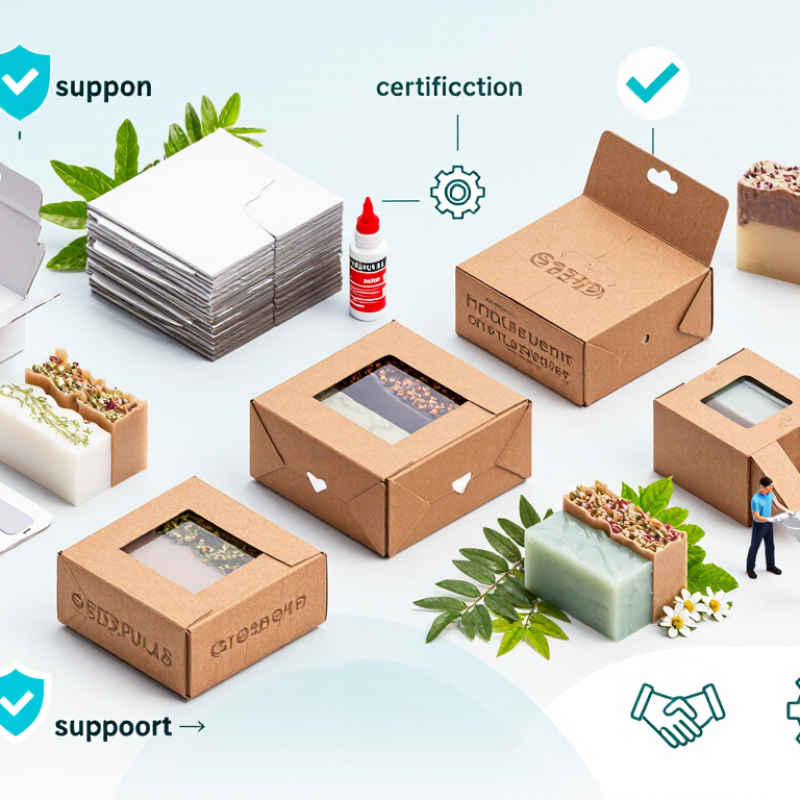
Top 10 Custom Soap Bar Folding Cartons Manufacturers

Custom Soap Bar Folding Cartons: Purpose, Materials, and Structural Features

Custom Soap Bar Folding Cartons: Purpose, Materials, and Structural Features

A soap carton protects the bar from dust, moisture, scuffing, and transport pressure. It also creates space for ingredients, directions, weight, and batch details. The European Commission reported 186.5 kilograms of packaging waste per person in the EU during 2022. That figure makes material efficiency more than a design preference. It becomes a practical responsibility. Folding cartons usually use paperboard between 250 and 400 gsm. Recycled board can reduce virgin fiber demand, but its surface may feel rougher. Virgin board offers cleaner printing and stronger folding performance. Neither option is perfect.

Structural design controls the customer’s first physical experience. Reverse-tuck ends support efficient packing and clean shelf presentation. Lock-bottom structures improve strength for heavier or irregular soap bars. A snug inner fit limits movement, while small side clearances prevent crushed corners. Embossing, debossing, and water-based coatings can add tactile interest without excessive plastic components. Smithers’ folding carton market outlook identifies sustainability and lightweighting as continuing industry priorities. In practice, lightweighting can fail when the carton loses compression strength.

Tips: Test the carton with real soap, not an empty mock-up. Check humidity, rubbing, glue strength, and opening force. Keep it simple. A perfect dieline is rarely perfect on press. Ask manufacturers for compression tests, paperboard specifications, and pre-production samples. These records support more reliable decisions than attractive digital renders.

How to Evaluate Custom Soap Packaging Manufacturers

Evaluating custom soap packaging manufacturers starts with the sample, not the sales presentation.

Request a physical folding carton made with your preferred paperboard, dimensions, coating, and artwork. Check whether the soap fits without rattling or crushing the corners. Open and close the carton repeatedly. A beautiful sample can still fail on a damp bathroom shelf.

A beautiful sample can still fail on a damp bathroom shelf.

Ask for measurable production details.

Confirm board thickness, printing tolerance, folding accuracy, glue placement, and expected defect rates. Reliable manufacturers should explain their inspection process with photographs, records, or batch samples. They should also provide clear timelines for artwork approval, sampling, production, and shipping. Vague answers create expensive surprises. Request material documentation and verify environmental claims through recognized certificates or test reports.

Board thickness Printing tolerance Folding accuracy Glue placement Expected defect rates

Experience matters during difficult conversations.

Ask how the factory handles color variation, damaged cartons, late deliveries, and artwork errors. Their response often reveals more than a polished portfolio. I once focused too much on a low unit price and ignored the weak locking tab. The cartons looked fine, but several opened during packing. That mistake changed my evaluation checklist.

Communication quality matters, too. A capable team should explain technical limits in plain language and suggest practical adjustments, such as increasing the side panel by two millimeters or changing the paper grain direction. No manufacturer gets everything perfect. A trustworthy partner admits limits, records corrections, and improves the next sample.

Top 10 Manufacturers of Custom Soap Bar Folding Cartons

The top 10 manufacturers of custom soap bar folding cartons are being judged by more than appearance. Production consistency, board quality, structural design, and print accuracy matter equally. Grand View Research estimates the global folding carton market will grow at about 4.7% annually through 2030. That growth increases pressure on manufacturers to control waste and maintain reliable delivery.

Leading suppliers usually offer recyclable paperboard, water-based coatings, precise die-cutting, and low minimum order quantities. Smithers’ folding carton market analysis identifies sustainability, automation, and premium finishing as major industry trends. For soap packaging, practical details remain important. A carton should protect a 100-gram bar, resist surface scuffing, and open without tearing. Small details matter.

The strongest manufacturers also provide prototypes before mass production. They can test folding strength, barcode readability, color variation, and carton fit. The Sustainable Packaging Coalition reports that paper-based packaging remains widely favored because it supports established recycling systems, although local recovery rates differ. The ranking is not flawless. Public data rarely compares every supplier under identical conditions. Buyers should request factory samples, material certificates, quality records, and realistic lead times. A beautiful sample proves little if production changes later. Shortlist carefully.

Comparing Design, Printing, Sustainability, and Production Capabilities

Top 10 Custom Soap Bar Folding Cartons Manufacturers: Comparing Design, Printing, Sustainability, and Production Capabilities

Choosing among the top 10 custom soap carton manufacturers requires more than reviewing attractive samples. Design quality appears in precise dielines, clean locking tabs, and inserts that prevent bar movement. A strong supplier can also match artwork across offset, flexographic, and digital printing. Color consistency matters. Even small shifts can weaken a premium shelf presentation.

Sustainability needs measurable evidence, not green language. Two Sides’ 2023 Trend Tracker found that 63% of surveyed consumers viewed paper and cardboard packaging as more environmentally friendly than other materials. Ask manufacturers for recycled content, fiber certification, coating details, and recovery guidance. Smithers’ packaging research also highlights lightweighting and improved fiber recovery as key market directions. Production capability remains practical: confirm minimum order quantities, sampling speed, automated folding capacity, and quality checks. I would not judge a factory by machinery alone. A fast press cannot repair weak structural testing or poor color control. Some suppliers may promise full customization, yet struggle with short runs or last-minute artwork changes. That gap deserves careful questioning.

Top 10 Custom Soap Bar Folding Cartons Manufacturers - Comparing Design, Printing, Sustainability, and Production Capabilities
Rank Manufacturer Profile Overall Fit Structural Design Capability Typical Board Options Printing and Finishing Sustainability Features Typical MOQ Typical Production Lead Time Quality and Compliance Support Best Suited For
1 Profile A Excellent Custom tuck-end, reverse-tuck, sleeve, window, and locking-bottom formats; dieline prototyping available. Recycled kraft, recycled coated board, and virgin SBS from approximately 250–400 gsm. Offset lithography, CMYK plus spot colors, aqueous coating, matte or gloss lamination, foil, and embossing. FSC-certified stock options, soy- or vegetable-based ink options, recyclable paper structures, and plastic-free packaging designs. Usually 5,000–10,000 pieces Approximately 18–30 working days after artwork approval Color proofing, barcode verification, carton dimensions, and batch inspection. Premium handmade soap brands requiring refined decoration and repeatable production.
2 Profile B Excellent Strong capability for compact soap cartons, nested layouts, inserts, and multi-size product families. Uncoated kraft, white kraft, folding boxboard, and recycled paperboard from approximately 250–350 gsm. Flexographic and offset printing, water-based coating, soft-touch coating, debossing, and limited foil decoration. Recycled content, water-based coatings, paper-only construction, and optimized sheet layouts to reduce waste. Usually 10,000–20,000 pieces Approximately 20–35 working days after final approval Material certificates, production samples, print registration checks, and carton compression testing. Growing soap lines that need several carton sizes with consistent visual identity.
3 Profile C Excellent Advanced folding-carton engineering, custom cut-outs, auto-lock bases, and high-speed filling-line compatibility. Folding boxboard, SBS, recycled board, and lightweight grades from approximately 280–400 gsm. High-resolution offset printing, spot color matching, UV coating, aqueous varnish, foil stamping, and tactile effects. FSC-certified and recycled grades, low-VOC processes, recyclable coatings, and material reduction consultation. Usually 20,000–50,000 pieces Approximately 25–40 working days after approval Color standards, in-line inspection, dimensional checks, and export packaging controls. Retail-ready soap ranges with demanding color consistency and higher annual volumes.
4 Profile D Very Good Efficient standard and custom tuck-end boxes, belly bands, sleeves, and simple die-cut windows. Kraft paperboard, recycled board, and coated folding carton stock from approximately 250–350 gsm. CMYK offset printing, digital proofing, matte varnish, gloss varnish, embossing, and economical foil options. Recycled paperboard, plastic-free windows where technically suitable, and water-based ink availability. Usually 3,000–8,000 pieces Approximately 15–25 working days after artwork approval Pre-production samples, artwork checks, weight verification, and visual inspection. Small and medium soap businesses seeking flexible order quantities and moderate customization.
5 Profile E Very Good Good support for sleeve-and-tray packs, soap gift sets, window cartons, and seasonal packaging. White kraft, natural kraft, recycled coated board, and SBS from approximately 300–450 gsm. Offset printing, digital short-run printing, foil stamping, spot UV, textured varnish, and embossing. Recyclable paperboard, recycled fiber options, plastic reduction guidance, and water-based finishing options. Usually 1,000–5,000 pieces Approximately 12–25 working days after final artwork approval Digital proofs, structural samples, print approval sheets, and final random inspection. Limited editions, artisan soap collections, gift packaging, and market testing.
6 Profile F Very Good Reliable standard carton production with custom dimensions, perforations, hang tabs, and easy-open features. Recycled kraft, coated recycled board, and standard folding boxboard from approximately 250–400 gsm. Offset printing, flexographic printing for selected substrates, aqueous coating, lamination, and basic foil. FSC-certified stock availability, recycled content, recyclable mono-material cartons, and low-ink coverage options. Usually 10,000–30,000 pieces Approximately 20–35 working days after approval Lot sampling, print density checks, carton flatness checks, and packing inspection. Established soap products requiring dependable replenishment and controlled unit costs.
7 Profile G Good Focus on practical tuck-end cartons, sleeve packaging, soap boxes with dust flaps, and straightforward dielines. Natural kraft, white kraft, recycled paperboard, and uncoated board from approximately 250–350 gsm. Flexographic or offset printing, one- to four-color artwork, water-based coating, and limited decorative effects. Paper-based structures, uncoated recyclable materials, recycled content, and reduced finishing complexity. Usually 5,000–15,000 pieces Approximately 18–30 working days after approval Basic artwork review, substrate confirmation, sample approval, and finished-carton inspection. Natural, minimalist, and cost-sensitive soap packaging programs.
8 Profile H Good Digital prototyping, short-run custom sizing, simple inserts, and rapid packaging revisions. Digital-compatible coated board, kraft board, and recycled stock from approximately 250–350 gsm. Digital color printing, short-run variable data, matte or gloss coating, and selected foil or raised effects. Low-waste short-run production, recyclable paperboard, and no-plate digital printing for small quantities. Usually 500–3,000 pieces Approximately 7–18 working days after artwork approval Digital proofing, dieline review, color sample approval, and basic dimensional inspection. Start-ups, pilot launches, custom events, and brands testing new soap fragrances.
9 Profile I Good High-volume folding-carton production with standardized tooling, efficient nesting, and limited structural variation. SBS, folding boxboard, recycled board, and kraft board from approximately 280–400 gsm. High-speed offset printing, spot colors, aqueous coating, matte lamination, and selected embossing. Recycled board programs, FSC-certified materials where available, lightweighting, and efficient production layouts. Usually 30,000–100,000 pieces Approximately 25–45 working days after approval Production specifications, color targets, sampling plans, and palletized export packing. Large-volume retail soap programs prioritizing production efficiency and unit economics.
10 Profile J Good Custom soap sleeves, simple folding cartons, wrap-around designs, and promotional multipacks. Uncoated kraft, recycled kraft, coated paperboard, and lightweight folding boxboard from approximately 220–350 gsm. Flexographic printing, offset printing for selected quantities, aqueous coating, die-cutting, and basic embossing. Recyclable paper formats, unbleached kraft choices, reduced coating use, and paper-only packaging options. Usually 5,000–20,000 pieces Approximately 18–32 working days after approval Material checks, artwork confirmation, sample review, and pre-shipment visual inspection. Eco-positioned soap products needing practical packaging at competitive production volumes.

Note: The figures shown are typical industry ranges for custom folding cartons and may vary according to carton size, board grade, artwork complexity, finishing requirements, order quantity, and destination. Sustainability claims should be verified through current material certificates and supplier documentation.

Selecting the Right Manufacturer for Your Soap Brand

Choosing among the top ten custom soap bar folding carton manufacturers requires more than comparing quoted prices. In practical packaging work, I inspect samples before discussing large orders. Feel the board edge. Check crease accuracy. A carton should fold cleanly around a 100-gram soap bar without crushing corners. Ask for material specifications, coating details, and measured tolerances. Clear answers often reveal stronger production control.

Request a pre-production sample with your actual dimensions, artwork, and closure style. Test it in humid bathroom conditions, during stacking, and after repeated handling. Paperboard that looks rigid on a desk may soften near a sink. Ask how the manufacturer manages color consistency across batches. Reliable teams provide documented quality checks, realistic lead times, and traceable approval records. They should also explain which finishes affect recyclability or increase minimum order quantities.

Cost still matters, but the lowest quote can hide setup fees, excess waste, or weak inspection procedures. Compare the full delivered cost, not only the unit price. Confirm production capacity before seasonal launches. I have seen attractive samples fail because the locking tab was too loose. That mistake was avoidable. Yet specifications alone are not enough. Communication matters when artwork changes, cartons arrive late, or a defect appears. Choose a manufacturer willing to discuss limitations plainly, provide corrective actions, and keep your soap packaging consistent as demand grows.

Typical Board Grammage for Custom Soap Bar Folding Cartons

Board grammage is a practical specification when selecting a folding-carton manufacturer. The ranges below reflect commonly used paperboard weights for commercial folding cartons; the final choice depends on carton size, product weight, printing, coating, and structural requirements.

FAQS

What should I check before choosing a custom soap carton manufacturer?

Request factory samples, material certificates, quality records, and realistic lead times. Inspect the board edge. Check crease accuracy and locking tabs. Do not judge appearance alone.

How should a carton fit a soap bar?

It should hold a 100-gram bar securely without crushing the corners. Test the actual dimensions and closure style. A loose tab can make the carton open during handling.

Why are prototypes important before mass production?

Prototypes reveal folding weakness, poor fit, color variation, and barcode problems. Test the carton before approving large quantities. A beautiful sample proves little if production changes later.

What printing qualities matter for soap packaging?

Look for accurate artwork, readable barcodes, and consistent colors across batches. Small shifts can weaken shelf presentation. Ask for documented color checks.

Which sustainability details should buyers request?

Ask about recycled content, fiber certification, coatings, and recovery guidance. Paper packaging may fit existing recycling systems, but local recovery rates differ. Green language is not enough.

Can a carton survive bathroom conditions?

Test it near humidity, during stacking, and after repeated handling. Paperboard may soften beside a sink. That test matters.

Is the lowest unit price the best option?

Not always. Compare setup fees, waste, inspection costs, shipping, and the full delivered price. A cheap quote can hide weak controls. Do not guess.

How can I judge a manufacturer’s production capability?

Confirm minimum order quantities, sampling speed, folding capacity, and quality procedures. Ask how artwork changes are handled. Machinery alone cannot prove reliability.

What should I do if cartons arrive with defects?

Choose a supplier that explains limitations, records approvals, and offers corrective actions. Communication matters when defects appear. The original decision may still need reflection.

Conclusion

Custom Soap Bar Folding Cartons are an effective packaging solution that combines product protection, visual appeal, and practical functionality. This article explains their purpose, common material options, and structural features, including paperboard strength, folding styles, locking mechanisms, product fit, and ease of handling. It also highlights how thoughtful carton design can support brand presentation while improving storage, transport, and customer experience.

The guide presents ten types of manufacturers that specialize in custom soap packaging and compares their capabilities in structural design, printing quality, material selection, sustainability, customization, minimum order quantities, lead times, and production reliability. It offers a practical framework for evaluating suppliers, from reviewing samples and certifications to confirming communication standards and quality-control processes. Finally, the article explains how to select the right manufacturer according to a soap brand’s product requirements, budget, visual goals, environmental priorities, and expected production volume.

Olivia

Olivia

Olivia is a dedicated marketing professional with a strong understanding of the company’s products, customers, and evolving market needs. Through a combination of strategic thinking, industry research, and practical experience, she helps communicate the value of the company’s solutions in a clear,......