0%

For global tea buyers, the box is more than a container. It protects delicate leaves, communicates quality, and shapes the first customer impression. Custom Tea Box Packaging helps brands present tea with a clear, consistent identity across different markets. A sturdy carton can prevent crushed corners during long shipments. A tight inner seal can help preserve aroma and freshness.

Practical packaging decisions begin with the tea itself. Green tea may need stronger protection from light, moisture, and heat. Herbal blends may require different box dimensions and interior supports. Buyers should also check paper quality, ink performance, closure strength, and packing efficiency. Small details matter. A loose insert can create noise, movement, and product damage inside the carton. Poor color control can make the same brand look different from one shipment to another.

Global purchasing teams often compare packaging samples before approving large orders. They review material specifications, print proofs, product information, and supplier consistency. Reliable documentation builds confidence, especially when packaging crosses language and market expectations. However, attractive artwork alone does not prove good packaging performance. That assumption deserves reconsideration. A beautiful box may still tear, fade, or waste warehouse space.

The strongest approach balances protection, presentation, sustainability, and practical cost control. It also respects accurate labeling and responsible material choices. When buyers test packaging under realistic handling conditions, they gain evidence instead of relying on promises. That evidence supports better purchasing decisions and a more trustworthy tea brand.
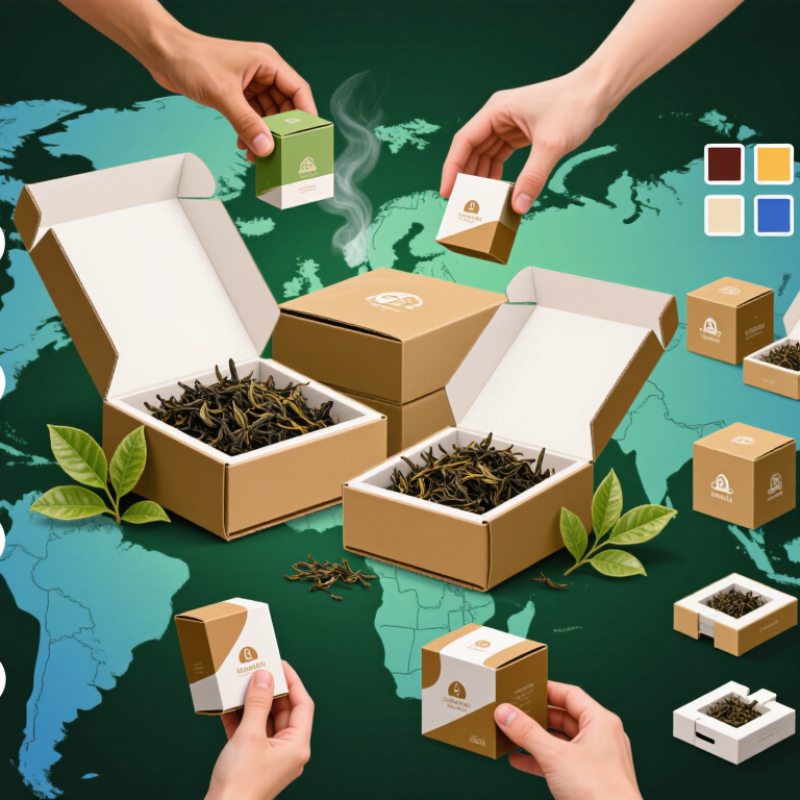
Why Custom Tea Box Packaging Matters for Global Buyers?

What Custom Tea Box Packaging Means for Global Buyers

For global buyers, custom tea box packaging means more than attractive artwork. It shows whether a supplier understands different markets, shipping conditions, and customer expectations. A well-designed box protects delicate leaves from crushing, moisture, light, and odor transfer during long-distance transport. It also communicates product information clearly, even when buyers speak different languages.

Material selection matters. Rigid paperboard may create a premium feel, while recyclable kraft board can support sustainability goals. Food-safe inks, secure inner seals, and accurate dimensions reflect professional production control. Buyers often check whether packaging survives stacking, vibration, and humid warehouses. Small details matter, such as a lid that closes firmly or a box that opens without tearing. These details reduce complaints and improve shelf presentation.

Customization is not automatically better. Excessive finishes can increase costs, waste, and shipping weight. A glossy surface may look impressive but show fingerprints easily. Some buyers also discover that complex designs slow production or create color differences between batches. Practical testing should come before large orders. Requesting samples, checking print accuracy, and reviewing label requirements can prevent expensive revisions. The best packaging balances protection, clarity, cultural awareness, and realistic supply planning. Sometimes, simpler works better.

How Custom Tea Boxes Protect Tea During International Shipping

Custom tea box packaging matters because international shipping exposes tea to pressure, vibration, humidity, and sudden temperature changes. Tea is fragile cargo. A box that fits the product closely reduces movement during transport. Strong paperboard or corrugated layers can also resist crushing when cartons are stacked.

Protection starts inside the package. A fitted insert keeps tins, pouches, or sachets away from the outer walls. Moisture-resistant coatings help during humid port transfers and rainy delivery routes. However, no material solves every problem. Excessive sealing may trap moisture, while weak inserts can collapse under weight. Practical drop and compression tests reveal these issues before shipment. They also show where real improvements are needed. A visually attractive box can still fail after one hard impact.

Tips: Match the box size to the tea format. Leave limited movement space. Add a clean internal barrier against moisture. Test packed boxes from several heights. Check corners, closures, and inserts after testing. Use readable handling information where appropriate. Packaging teams should also review storage conditions, because a box designed for dry warehouses may perform poorly in coastal or tropical routes. Small design changes often protect aroma, shape, and presentation more effectively than thicker materials alone.

Why Custom Tea Box Packaging Matters for Global Buyers

How custom tea boxes protect tea during international shipping

Moisture is one of the main threats to tea quality during long-distance transport. Typical moisture-vapor transmission rates show why a custom box is often paired with a coated inner layer or foil laminate pouch: lower MVTR means stronger protection against humidity and aroma loss.

Representative industry material ranges; exact performance varies with thickness, coating, sealing quality, test temperature, and relative humidity.

Why Packaging Design Influences Global Tea Buying Decisions

Packaging design strongly influences global tea buying decisions because it communicates quality before the first sip. A rigid box, clean typography, and a precise color palette can suggest freshness and origin. However, attractive visuals alone are not enough. Buyers also inspect the opening experience, inner protection, material texture, and information clarity. A loose lid or unreadable brewing instructions can weaken trust quickly. Small details matter.

Trivium Packaging’s 2023 Global Buying Green Report found that 82% of consumers were willing to pay more for sustainable packaging. PwC’s 2024 Voice of the Consumer Survey also reported that consumers accepted an average 9.7% premium for sustainably produced or sourced goods. These findings matter for tea exporters. Recyclable paper, low-ink printing, and clear disposal guidance can support purchase confidence. Yet sustainability claims must be specific. Vague green language may look polished, but it can raise suspicion.

In practical packaging reviews, buyers often compare boxes under bright retail lighting and on crowded digital screens. Strong contrast helps recognition, while restrained graphics preserve a premium feeling. Cultural preferences still differ across markets. A color associated with celebration in one region may suggest mourning elsewhere. Packaging teams should test designs with local buyers before production. I have found that teams sometimes overdesign the front panel and hide essential details. That is an avoidable mistake. Tea type, net weight, origin, ingredients, and preparation guidance should remain easy to find.

How Custom Packaging Supports Branding and Market Adaptation

Why Custom Tea Box Packaging Matters for Global Buyers?

Custom tea boxes turn a product into a recognizable market signal. Color, typography, and structural details can express calm, heritage, or modern wellness. A practical box also creates space for local languages, brewing icons, origin details, and clear weight information. These details help buyers understand the product before opening it. Smithers’ Future of Sustainable Packaging to 2028 report values the global sustainable packaging market at approximately $272 billion in 2023. This growth shows why material choices increasingly influence purchasing decisions.

Market adaptation requires more than translating a label. Packaging teams should test whether a box protects tea from humidity, crushing, and repeated handling. A tight inner seal and sturdy 250-gram carton may suit export shipping better than a fragile luxury structure. McKinsey’s 2023 global consumer research found that 60–70% of consumers would pay more for sustainable packaging in several surveyed markets. Still, buyers may reject vague environmental claims. Specific material information is more credible.

Custom packaging can also support different retail habits. A compact box fits small urban shelves, while a gift sleeve supports premium seasonal sales. However, overdesign remains a common mistake. Too many colors can weaken recognition. Excessive inserts can increase waste and shipping costs. A useful review asks whether every printed element earns its space. The best adaptation is sometimes less dramatic, but more readable, protective, and locally relevant.

What to Consider When Choosing Custom Tea Box Packaging

Why Custom Tea Box Packaging Matters for Global Buyers

When choosing custom tea box packaging, protection should come before decoration. A damaged box weakens buyer confidence quickly. Select rigid paperboard or corrugated structures based on shipping distance and product weight. The box should protect tea bags from crushing, moisture, light, and unpleasant odors. Fit matters too. Excess space increases movement and shipping costs.

Printing quality also deserves careful review. Colors may appear different on recycled paper or under store lighting. Request a physical sample before approving large production. Check the folding lines, inserts, barcode position, and opening experience. A practical design often performs better than an impressive but fragile one. Sustainability needs evidence, not vague claims. Ask about recycled content, coatings, inks, and recyclability in the target market.

Tips: Test filled boxes through handling and drop checks. Compare two or three board thicknesses. Keep text readable in small sizes. Leave space for required product information and recycling guidance. Avoid packaging that is difficult to separate or dispose of. Small details matter. In real packaging reviews, elegant concepts sometimes fail because the lid loosens during transport. That mistake is easy to miss on a screen. Global buyers should also confirm production tolerances, lead times, and quality inspection procedures before placing an order.

Why Custom Tea Box Packaging Matters for Global Buyers? - What to Consider When Choosing Custom Tea Box Packaging

Evaluation Dimension What Global Buyers Usually Need Practical Specification or Benchmark Why It Matters How to Verify Before Production
Board Strength A rigid carton that protects tea bags, tins, or pouches during handling and international shipping. Common folding-carton planning range: approximately 300–500 g/m² paperboard, adjusted for product weight and box structure. Insufficient stiffness can cause crushed corners, deformation, and a lower-quality presentation. Request a material specification sheet, caliper measurement, compression test, and a filled sample.
Moisture Protection Packaging that limits moisture exposure because tea quality can decline when leaves absorb humidity. Use an inner pouch or liner with a documented moisture-barrier performance; the exact target should be based on tea type, climate, and shelf life. Moisture can affect aroma, texture, freshness, and shelf stability. Review water-vapor transmission data and conduct accelerated storage testing under humid conditions.
Oxygen and Aroma Barrier A sealed inner package that helps preserve delicate flavor and aroma compounds. Specify oxygen-transmission and aroma-retention requirements for the inner pouch; the outer box alone is generally not a sufficient barrier. Oxygen and odor transfer may accelerate flavor loss and create unwanted sensory changes. Check barrier test reports, seal integrity, odor neutrality, and product samples after storage.
Food-Contact Safety Materials and inks suitable for the intended contact scenario and destination market. Use food-contact-compliant paper, coatings, adhesives, and inks; requirements differ between jurisdictions. Non-compliant materials may create import delays, recalls, or consumer-safety concerns. Obtain declarations of compliance, migration-test results, and batch-level material documentation.
Print and Color Consistency Consistent colors, sharp text, readable information, and accurate reproduction across repeated orders. Approve a physical color proof and define acceptable color tolerance using an agreed measurement method such as CIE L*a*b* or ΔE. Visual inconsistency can weaken shelf impact and make different production batches look mismatched. Compare production samples with the approved proof under standardized lighting.
Structural Accuracy A box that folds, closes, stacks, and fits the inner package without excessive movement. Confirm internal dimensions, fold lines, glue areas, locking tabs, and tolerance before tooling approval. Poor fit increases damage risk, material waste, and assembly time. Use a 1:1 white sample and a filled production prototype for fit and assembly testing.
Shipping Durability Packaging that withstands compression, vibration, impact, stacking, and changes in temperature or humidity. Test the complete packed configuration, including inner packs, cartons, pallets, and shipping orientation. International logistics expose packaging to more handling cycles than local retail distribution. Use a recognized distribution or transport-testing protocol appropriate to the shipment route.
Sustainability Profile A design that reduces unnecessary material while supporting local recycling requirements. Prefer right-sized cartons, recyclable paperboard where suitable, and clearly documented coatings, laminates, inks, and adhesives. Material choices affect environmental claims, disposal options, and buyer acceptance in different markets. Review the bill of materials, recycled-content data, recyclability evidence, and destination-country guidance.
Labeling and Traceability Clear product information that supports customs clearance, retail compliance, and consumer use. Allow space for product name, net quantity, ingredients, allergen information where applicable, lot code, best-before date, origin, and importer details when required. Missing or unreadable information can lead to relabeling, delays, or market withdrawal. Have the final artwork reviewed against the regulations of every intended destination market.
Minimum Order and Cost Control Predictable unit costs, tooling charges, setup fees, and reorder conditions. Compare total landed cost, not only the box price; include tooling, proofing, freight, duties, waste, and storage. A low unit price may be offset by high minimum quantities or expensive international logistics. Request a written quotation with volume tiers, lead times, payment terms, and reorder pricing.
Lead Time and Supply Reliability A production schedule that supports launch dates and regular replenishment across borders. Separate artwork approval, sampling, tooling, production, inspection, export documentation, and transit time in the project plan. Custom packaging usually requires more coordination than standard stock cartons. Confirm a written timeline, inspection point, corrective-action process, and contingency plan for delays.

Note: Specifications are planning benchmarks rather than universal requirements. Final packaging performance and labeling obligations should be validated for the tea format, distribution route, and destination market.

FAQS

What does custom tea box packaging communicate to global buyers?

It shows how well a supplier understands protection, shipping, labeling, and local customer expectations. Attractive artwork helps, but practical details matter more. A box that arrives crushed sends the wrong message.

How can a tea box protect products during international shipping?

A close-fitting structure limits movement during vibration and stacking. Strong paperboard or corrugated layers help resist crushing. Inner inserts can keep pouches, tins, or sachets away from the outer walls.

Which packaging materials are suitable for different shipping conditions?

Rigid paperboard can create a premium feel and support firm structure. Recyclable kraft board may suit sustainability goals. Humid routes need moisture-resistant protection, but excessive sealing can trap moisture.

Why should buyers request physical packaging samples?

Samples reveal problems that screen images hide. Check folding lines, lid closure, print colors, inserts, and barcode placement. A beautiful design may still tear or loosen.

What tests should custom tea boxes pass before production?

Packed boxes should undergo drop, compression, and handling checks. Inspect corners, closures, and inserts afterward. Test several heights and stacking conditions. One test is not enough.

How should buyers balance decoration and practical performance?

Extra finishes can increase cost, waste, production time, and shipping weight. Glossy surfaces may show fingerprints easily. Sometimes, simpler works better. I might still choose decoration for a special shelf position.

What printing and labeling details require careful review?

Text should remain readable at small sizes and under store lighting. Recycled paper can change color appearance. Leave space for required product information and recycling guidance.

How can buyers evaluate sustainability claims?

Ask about recycled content, coatings, inks, and disposal options in the target market. Sustainability needs evidence, not broad promises. A recyclable material may still be difficult to separate or process.

Why does box size matter for tea packaging?

Excess space allows tea products to move during transport and can increase shipping costs. Match the box closely to the product format. Leave only limited movement space.

What production details should global buyers confirm?

Confirm production tolerances, lead times, and inspection procedures before ordering. Review storage conditions for humid or coastal routes. Small changes often help more than simply adding thicker material.

Conclusion

Custom Tea Box Packaging is an important tool for global tea buyers because it combines protection, presentation, and practical market adaptation. Well-designed boxes help shield tea from moisture, light, pressure, and damage during long-distance transportation, preserving freshness and product quality from the production site to the final customer. Suitable materials, secure structures, and reliable inner protection are especially valuable when products pass through different climates and shipping conditions.

Packaging design also strongly influences purchasing decisions by communicating quality, purpose, and product identity at a glance. Custom packaging allows tea suppliers to adjust sizes, languages, visuals, and information for different markets while creating a consistent and recognizable image. When choosing a solution, global buyers should consider durability, material safety, printing quality, sustainability, cost, production flexibility, and shipping efficiency. A thoughtful packaging strategy can improve customer confidence, support market entry, and create a more competitive tea product without sacrificing functionality.

Amelia

Amelia

Amelia is a dedicated marketing professional with a strong understanding of the company’s products, services, and customer-focused solutions. With a thoughtful approach to communication and a passion for turning complex information into clear, useful insights, she regularly contributes professional......