CE Certified High-Barrier Coffee Packaging Catalog
Engineered for aroma retention, moisture control, and gas preservation. Explore our factory-direct customizable pouches and bags.
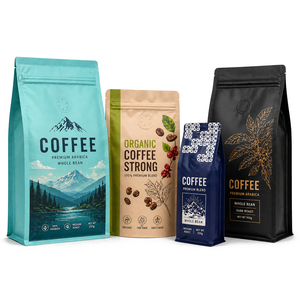
Custom Printed Coffee Bag Valve Zipper Top Flat Bottom Pouch Premium Arabica Coffee Packaging Food Grade
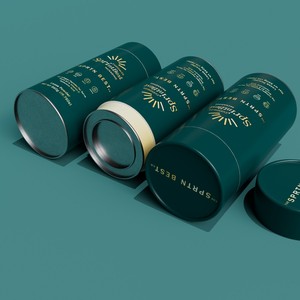
Customised Eco Friendly Food Grade Kraft Tea Coffee Bean Powder Paper Tube Packaging With Barrier Lining
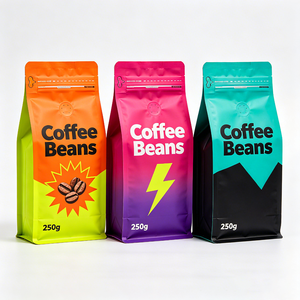
Premium 250g 500g 1kg Moisture Proof Flat Bottom Coffee Bean Packaging Matte Aluminum Foil with Air Valve
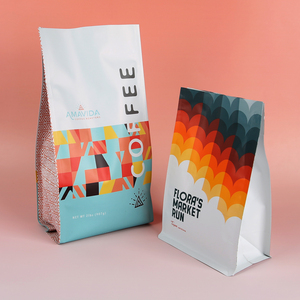
Custom Cafe Empty Coffee Bags Custom Printed Coffee Beans Packaging Bags 250g 500g 1kg Flat Bottom Coffee Pouch
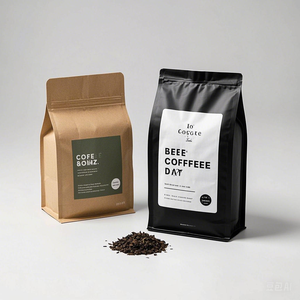
Custom Coffee Bag 250g 500g Wholesale Recyclable Soft Touch Zipper Eight Sided Sealing Mylar Bags With Valve
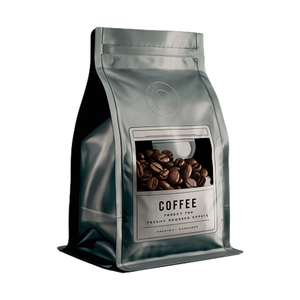
Custom Moisture Proof Tea/Coffee Bean Packaging Bags With Valve Packaging Flat Bottom 100g 250g 340g 500g 1kg Bag
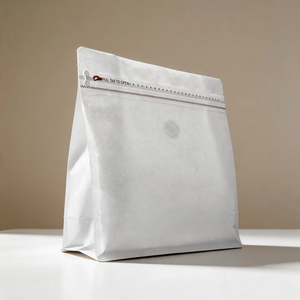
Food Grade Flat Bottom Plastic Packaging Bag Coffee with Valve Snack Packaging Pouch Nuts Square Doypack
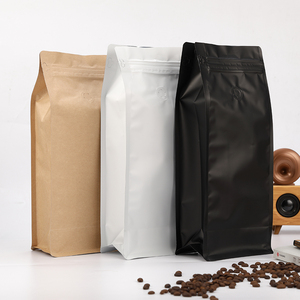
Custom Digital Printing Coffee Bean Powder Packing Bag Wholesale Black White Flat Bottom Bag With Easy Tear Zipper
State of Coffee Packaging Manufacturing: CE Certification, Material Engineering & Sourcing Compliance
In the global specialty coffee supply chain, packaging serves as the critical defense layer between freshly roasted coffee beans and environmental degradation factors such as oxygen ingress, moisture absorption, UV light radiation, and volatile aromatic loss. Sourcing from certified manufacturing plants requires evaluating both regulatory compliance and advanced material science. As brand owners, commercial coffee roasters, and B2B distributors scale their international presence, partnering with a CE Certified coffee packaging factory guarantees that every pouch meets stringent European health, safety, food-contact, and environmental protection standards.
Information Gain Insight: CE compliance in flexible food packaging is not merely a stamp; it signifies full compliance with EU Regulation (EC) No 1935/2004 on materials intended to come into contact with food, EU Regulation (EU) No 10/2011 on plastic materials, and EN 13432 for industrial organic compostability benchmarks. Certified factories provide rigorous batch-level migration testing and structural integrity documentation.
Freshly roasted specialty coffee undergoes intense off-gassing, releasing significant volumes of carbon dioxide (CO₂) for days post-roast. Without proper structural engineering, sealed bags are prone to bloating or catastrophic seam ruptures. Conversely, unsealed packaging exposes roasted beans to atmospheric oxygen, accelerating the oxidation of delicate lipophilic aromatics, causing stale flavors within 72 hours. Modern coffee packaging factories must harmonize high-barrier laminate structures with precision one-way degassing valves to achieve extended shelf-life retention exceeding 12 to 24 months.
Core Factory Competencies & Technical Infrastructure
Leading global OEM/ODM manufacturing facilities operate under cleanroom conditions (Class 100,000) equipped with state-of-the-art multi-layer co-extrusion blown film lines, high-speed 10-color rotogravure printing presses, solvent-free lamination machinery, and automated pouch-making systems. When auditing a coffee packaging supplier, technical buyers must evaluate four foundational manufacturing pillars:
High-Barrier Laminate Engineering
Custom multi-layer barrier laminates combining PET, VMPET, AL (Aluminum Foil), EVOH, Kraft Paper, and PE to achieve near-zero Oxygen Transmission Rates (OTR < 0.1 cc/m²/24h) and Water Vapor Transmission Rates (WVTR < 0.1 g/m²/24h).
One-Way Degassing Valve Integration
Automated thermal or ultrasonic installation of internal one-way degassing valves. Engineered to vent internal pressure exceeding 3–5 mbar while preventing external ambient air entry during transport and storage.
Advanced Surface Finishing & Print Precision
Solvent-free printing utilizing eco-friendly food-grade inks. Features include high-definition photographic graphics, spot UV accents, tactile soft-touch matte coatings, metallic hot foil stamping, and registered window cuts.
Structural Form-Factor Versatility
Precision dieline conversion for eight-side sealed flat bottom pouches (box pouches), traditional quad-seal bags, Doypack stand-up pouches, side-gusseted bags, and sustainable paper tube containers with barrier linings.
Technical Specifications & Material Substrate Matrix
Below is an analytical overview of the structural substrate combinations produced by certified factories, tailored to distinct commercial coffee applications and shelf-life requirements:
| Pouch Type | Material Layer Laminate | Barrier Rating | OTR / WVTR Specs | Target Coffee Application |
|---|---|---|---|---|
| Flat Bottom (Box Pouch) | Matte PET / AL / PE or PET / VMPET / LLDPE | Ultra-High Barrier | OTR < 0.05 / WVTR < 0.05 | Premium Whole Bean Arabica (250g, 500g, 1kg) |
| Recyclable Mono-PE Pouch | High-Barrier MDO-PE / EVOH-PE | High Sustainable Barrier | OTR < 0.5 / WVTR < 0.5 | Eco-Conscious Specialty Roasters & EU Retail |
| Kraft Paper Barrier Tube | Kraft Paper / Aluminum Foil / Food-Grade PE | High Mechanical & Gas Barrier | OTR < 0.1 / WVTR < 0.1 | Artisanal Tea, Micro-Lot Coffee Beans & Powders |
| Soft-Touch Mylar Bag | Soft-Touch Matt PET / VMPET / PE | Superior Aesthetic & Gas Barrier | OTR < 0.2 / WVTR < 0.2 | Retail Commercial Coffee Brands & Flavored Beans |
| Standard Stand-Up Doypack | PET / PE or Gloss PET / VMPET / PE | Medium to High Barrier | OTR < 0.8 / WVTR < 0.8 | Supermarket Retail, Ground Coffee & Coffee Pods |
Future Procurement Trends in Coffee Packaging (2025–2030)
As global environmental regulations intensify and consumer preferences shift toward circular economies, coffee packaging procurement is undergoing fundamental transformations. B2B procurement managers and roaster brands must align their packaging strategies with four emerging macro trends:
1. Transition to Mono-Material Recyclable Structures
Traditional high-barrier coffee pouches relied heavily on aluminum foil laminated between polyester and polyethylene (PET/AL/PE). While providing exceptional barrier protection, these multi-material structures are difficult to recycle in conventional municipal waste streams. The industry is rapidly shifting toward Mono-Material PE (Polyethylene) structures utilizing Modified Directional Polyethylene (MDO-PE) combined with ultra-thin EVOH coatings. These innovations achieve 100% recyclability under SPI Code 4 (LDPE) while preserving oxygen barrier performance required for a 12-month shelf life.
2. Industrial & Home Compostable Laminates
Driven by European Directive requirements and consumer demand, bio-based films engineered from certified PLA (Polylactic Acid), PBAT, and certified Kraft paper are gaining market share. Leading CE certified packaging factories now produce certified compostable coffee pouches (compliant with EN 13432 and ASTM D6400) fitted with compostable degassing valves and PLA zippers, breaking down into organic humus without toxic microplastic residue.
3. Digital Short-Run Printing vs. High-Volume Flexo/Rotogravure
Market fragmentation, seasonal micro-lots, and private-label roasting require smaller order quantities and rapid SKU turnarounds. Advanced factories now offer hybrid production capabilities: high-definition HP Indigo digital printing for short-run custom branding (MOQs as low as 500–1,000 units) alongside traditional rotogravure printing for high-volume commercial runs (MOQs 10,000+ units), reducing plate costs and eliminating lead times for seasonal releases.
4. Smart Packaging & Digital Traceability
The integration of high-resolution 2D data matrix codes, variable QR codes, and tamper-evident features directly onto printed coffee pouches enables full farm-to-cup supply chain transparency. Roasters utilize custom-printed pouches to share harvest origin data, cupping scores, roast profile timelines, and direct-trade farmer compensation metrics directly with end consumers.
Product & Structural Development Trends
Structural ergonomic design plays a crucial role in retail shelf standing, brand differentiation, and packaging line efficiency. The standard quad-seal bag is increasingly replaced by eight-side sealed flat bottom pouches. The flat bottom architecture provides 360-degree branding surfaces, superior vertical stability on supermarket shelves, and optimal volumetric space efficiency, reducing shipping carton void space by up to 15% compared to traditional pillow pouches.
Furthermore, structural innovations such as front-pocket tear zippers (E-Z Zip) allow consumers to unseal and reseal bags effortlessly without damaging the top header or requiring scissors. Reinforced side gussets, ergonomic handles for bulk 1kg/5lb commercial roaster bags, and specialized anti-bulging inner webbing ensure structural integrity throughout transit across sea and air freight networks.
Factory Selection & Procurement Checklist for B2B Buyers
When selecting a OEM coffee packaging factory, global buyers should perform thorough technical audits based on the following criteria:
- Regulatory Documentation: Request full declaration of compliance (DoC) for food contact under EU 10/2011, US FDA 21 CFR 177.1520, and CE mark conformity certificates.
- Oxygen & Moisture Testing Reports: Verify laboratory test data for OTR (ASTM D3985) and WVTR (ASTM F1249) carried out on fully converted pouches with integrated valves and zippers.
- Valve Performance Criteria: Ensure one-way degassing valves exhibit precise opening pressure (3–5 mbar) and immediate sealing closure to prevent back-siphoning of air under ambient pressure fluctuations.
- Sealing Integrity & Burst Strength: Confirm thermal seal strength exceeds 35 N/15mm to withstand atmospheric pressure variations during high-altitude transport or air freight shipping.
- Batch Consistency & Color Matching: Ensure the manufacturing plant utilizes Spectrophotometric color measurement (Delta E < 2.0) to maintain strict brand color consistency across reorders.
Frequently Asked Questions by Global Coffee Importers
What specific standards define a CE Certified coffee packaging factory?
Why is a one-way degassing valve essential for roasted coffee bean bags?
What is the difference between aluminum foil (AL) and metallized film (VMPET)?
Are 100% recyclable coffee pouches as effective as traditional packaging?
What are the typical Minimum Order Quantities (MOQs) for custom factory orders?
How does nitrogen flushing work with factory-manufactured coffee packaging?
What file formats and proofing processes are required for custom OEM production?
What is the standard manufacturing lead time for custom coffee packaging?
Ready to Scale Your Coffee Packaging Supply Chain?
Partner directly with a CE Certified coffee packaging factory. Contact our engineering team for free structural dielines, sample packs, and competitive volume quotes.