Engineered Apparel Packaging Solutions
Explore our export-grade custom clothing boxes, engineered with rigid greyboard, FSC-certified kraft paper, magnetic closures, and luxury finishing for global retail and e-commerce logistics.
Executive Sourcing Analysis: Sourcing Garment Packaging from China's Industrial Centers
In the competitive landscape of global fashion retail, haute couture, and direct-to-consumer (DTC) apparel e-commerce, secondary and tertiary packaging serves as a critical bridge between brand strategy and customer experience. As a premier China-based manufacturer and exporter of specialized apparel boxes, our facility operates at the intersection of automated paperboard conversion, precise structural engineering, and sustainable material science.
Sourcing apparel packaging directly from China offers international buyers significant structural advantages. Leveraging fully integrated supply chains—from virgin wood pulp sourcing and recycled greyboard milling to high-speed offset Heidelberg press operations and automated magnetic assembly lines—our manufacturing ecosystem reduces unit costs while upholding strict international quality standards such as ISO 9001, ISO 14001, FSC (Forest Stewardship Council), and BSCI compliance.
Information Gain Insight: Modern apparel packaging sourcing has shifted from basic box dimensions to holistic landed-cost engineering. By transitioning from rigid non-collapsible boxes to precision-engineered collapsible magnetic rigid structures, global apparel brands reduce international freight volumes by up to 75%, slashing warehousing footprints while retaining a luxury unboxing experience.
Core Manufacturing Ecosystem Capabilities
Rapid Dieline & Mockup
Complete structural dieline creation within 24 hours and physical prototypes delivered via air express in 5 to 7 business days.
Advanced Print Technologies
Heidelberg 6-color offset presses, digital short-run printing, precise Pantone (PMS) color matching, and aqueous protective coatings.
Certified Eco Stocks
Comprehensive availability of FSC-certified virgin kraft, post-consumer recycled (PCR) paperboard, and plastic-free bio-laminates.
Material Engineering Matrix: Substrates, Calipers, and Application Standards
Selecting the optimal material specification is essential for balancing structural integrity during transoceanic shipping, tactile brand appeal, and target unit costs. Below is our standardized material matrix utilized by procurement teams worldwide:
| Box Architecture Type | Core Substrates & Density | Available Surface Finishes | Target Apparel Application | Recommended MOQ |
|---|---|---|---|---|
| Collapsible Rigid Magnetic Box | 1.5mm - 3.0mm Solid Industrial Greyboard wrapped in 157gsm Art Paper or Specialty Paper | Soft-touch matte lamination, hot foil stamping (Gold/Rose Gold/Silver), debossing, spot UV | Luxury Suits, Footwear, Designer Dresses, Evening Wear, Subscription Sets | 100 units |
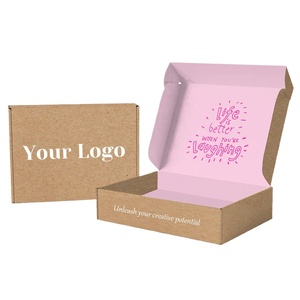
| E-Commerce Corrugated Mailer | 3-layer E-Flute / B-Flute Corrugated Board (Kraft or White Surface, 250gsm - 350gsm Face) | Flexographic printing, offset laminated matte/gloss, water-based anti-scratch coating | T-Shirts, Knitwear, Activewear, Streetwear DTC Shipments, Denim | 250 units |
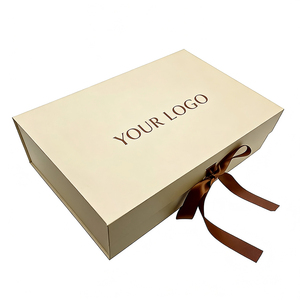
| Luxury Ribbon Lid & Base Box | 2.0mm High-Density Chipboard with double-sided wrapping paper & satin/grosgrain ribbon closures | Embossed texture paper, tactile linen wrapping, metallic foil rimming | Haute Couture, Bridal Gowns, Premium Silk Products, Accessories | 100 units |
| Folding Paperboard Carton | 300gsm - 450gsm Solid Bleached Sulfate (SBS) / C1S Artboard or Recycled Kraft Paperboard | Aqueous coating, gloss/matte lamination, window die-cutting with PET/Bio-film | Underwear, Socks, Shirts, Scarves, Lightweight Fashion Apparel | 250 units |
Future Procurement Trends in Apparel Packaging (2025–2030)
As global environmental regulations tighten and consumer preferences evolve toward conscious consumption, the procurement landscape for apparel packaging is undergoing structural shifts. Procurement managers must adapt to five overarching trends shaping the next half-decade:
1. Transition to Mono-Material and Plastic-Free Packaging
Extended Producer Responsibility (EPR) regulations in Europe and North America are forcing brands to eliminate multi-material packaging that cannot be processed in municipal recycling streams. The industry is rapidly abandoning traditional plastic lamination in favor of plastic-free aqueous coatings, water-based inks, and biodegradable paper windows. Mono-material corrugated and unbleached kraft constructions are witnessing double-digit annual growth in international procurement volume.
2. Volumetric Optimization & Flat-Pack Engineering
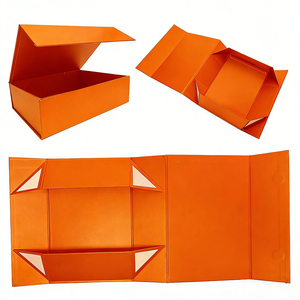
With ocean container spot rates and air freight fees subject to global supply chain volatility, dimensional weight (DIM weight) reduction is a top KPI for logistics leads. Traditional rigid boxes transport over 80% empty air from factory to packing house. Next-generation apparel box designs incorporate precision die-cut fold lines and high-strength hidden magnetic corners, allowing 2.5mm rigid boxes to ship completely flat and assemble instantly at fulfillment centers.
3. Smart Packaging and Digital Traceability Integration
Modern apparel packaging increasingly incorporates embedded technological touchpoints—such as invisible QR codes, NFC chips, and RFID tags—directly within the paperboard layers. This facilitates digital authentication against luxury counterfeit goods, enables real-time inventory tracking through 3PL networks, and provides end consumers with interactive brand storytelling and supply chain transparency via mobile scans.
4. Circular Economy & Post-Consumer Recycled (PCR) Paperboard
Enterprise fashion brands are establishing closed-loop sourcing goals, targeting 80% to 100% PCR content in secondary packaging by 2030. Advanced paper milling techniques now allow 100% recycled greyboards to maintain structural compression ratings equivalent to virgin pulp boards, preventing box collapse under stacking pressures during international transport.
Industry & Structural Development Trends: Manufacturing Automation
The manufacturing process for high-end apparel boxes has transitioned from labor-intensive manual assembly to fully automated smart production facilities. Key technological developments driving production quality include:
Automated Visual Positioning
High-precision CCD camera positioning systems ensure wrapping paper registration accuracy within ±0.05mm, eliminating skewing on rigid box covers.
Automatic Magnet Insertion
Robotic arms automatically drill, insert, and seal neodymium magnets into rigid box walls, guaranteeing consistent magnetic closing tension.
Soy-Based & UV Inks
Full adoption of volatile organic compound (VOC)-free soy inks and energy-efficient LED-UV curing systems for crisp visual color vibrancy.
By implementing inline spectrophotometers and automated drop-test simulators on the factory floor, high-volume manufacturers guarantee that box colors match master Pantone guides across separate production batches, and that finished boxes withstand international courier drop forces (ISTA 1A certified).
Apparel Packaging Sourcing FAQ: Guidance for B2B Buyers
Answers to common questions from international buyers, procurement leads, and packaging engineers when sourcing custom apparel boxes from China.
What is the Minimum Order Quantity (MOQ) for custom apparel boxes?
Our minimum order quantity is engineered to support growing independent labels as well as global enterprise brands. Standard rigid magnetic gift boxes and custom ribbon boxes start at just 100 units. Custom printed corrugated mailers, kraft shipping boxes, and folding cardstock cartons start at 250 units. Digital sampling capabilities allow us to produce short-run pre-production prototypes before committing to mass production runs.
How long does production take from artwork approval to shipment?
Physical structural prototypes are produced within 5 to 7 business days. Upon final client approval of the physical sample or digital press proof, mass production turnaround typically requires 10 to 12 business days for folding cartons and mailer boxes, and 12 to 18 business days for hand-finished or complex magnetic rigid boxes. Express air freight to North America and Europe takes 4 to 7 days, while sea freight standard delivery takes 25 to 35 days.
Can you manufacture collapsible (flat-pack) rigid magnetic boxes?
Yes. Our collapsible rigid magnetic boxes are among our top-exported apparel packaging solutions. They utilize precise v-cut grooving on 1.5mm–3.0mm greyboard and feature double-sided adhesive tabs or hidden corner magnets. This design allows the box to store and ship 100% flat—drastically reducing international freight and warehouse storage fees—and pop up into a rigid, high-end gift box in seconds at fulfillment.
What board thicknesses and kraft paper grades are available?
We supply a wide range of paperboard specs: Rigid boxes use high-density greyboard ranging from 600gsm to 1800gsm (1.0mm to 3.0mm thickness). Corrugated mailers use single-wall E-flute (1.5mm), B-flute (3.0mm), or F-flute (0.8mm) with kraft or white liners. Folding cartons utilize 300gsm to 450gsm C1S art paper, SBS board, or natural unbleached virgin/recycled kraft paper.
How do you ensure brand color accuracy across production batches?
We utilize Heidelberg offset presses equipped with X-Rite inline spectrophotometer color management systems. All custom brand colors are calibrated against original Pantone Matching System (PMS) target guides under standard D50 lighting. Color tolerances are strictly controlled within ΔE < 1.5. Master color standards are archived for each client SKU to guarantee absolute visual consistency on repeat reorders.
Do you offer fully eco-friendly, plastic-free, and FSC-certified packaging?
Yes, sustainability is central to our material development. We offer FSC-certified paperboards sourced from responsibly managed forests, 100% post-consumer recycled greyboards, soy and vegetable-based inks, water-based aqueous coatings (replacing plastic gloss/matte film laminations), and plastic-free bio-degradable cellulose window films.
What file formats are required for custom dielines and printing artwork?
We accept press-ready vector artwork files in Adobe Illustrator (.AI), Editable PDF (.PDF), or Encapsulated PostScript (.EPS) format. Text elements should be outlined/converted to vector paths, colors set to CMYK or designated Pantone spot codes, and images embedded at a minimum resolution of 300 DPI with 3mm bleed allowance on all sides. Our engineering team provides free pre-press checks on all dielines.
Do you ship direct to 3PL warehouses and Amazon FBA fulfillment centers?
Yes, we provide end-to-end global logistical fulfillment. We ship directly to brand warehouses, 3PL logistics facilities, and Amazon FBA prep centers across North America, Europe, Australia, and Asia. Our team manages master carton labelling, palletization, customs clearance, and DDP (Delivered Duty Paid) door-to-door delivery documentation.